
Shop No.20, Aurobindo Palace Market, Hauz Khas, Near Church +91 9818282497 | 011 26867121 110016 New Delhi IN
Midland The Book Shop ™
Shop No.20, Aurobindo Palace Market, Hauz Khas, Near Church +91 9818282497 | 011 26867121 New Delhi, IN
+919871604786 https://www.midlandbookshop.com/s/607fe93d7eafcac1f2c73ea4/69591829db7aed90e0608dfb/without-tag-line-480x480.png" [email protected]
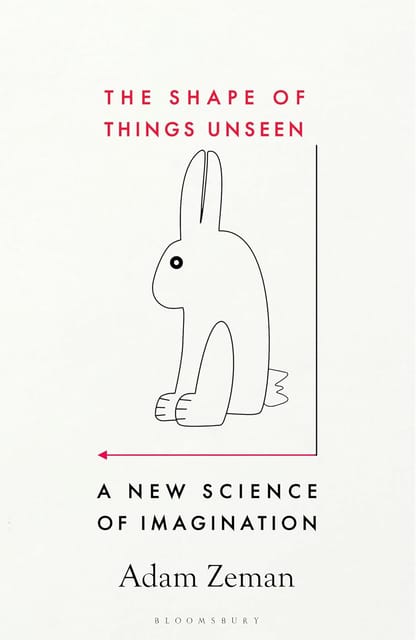
9781526609748 6a9812b9a6b9a8dbc5117245 The Shape Of Things Unseen A New Science Of Imagination https://www.midlandbookshop.com/s/607fe93d7eafcac1f2c73ea4/6a9812baa6b9a8dbc511724d/61kgdy3i1el-_sl1500_.jpg
'Fascinating, absorbing and educative' A. C. Grayling
'Highly original and beautifully written' Dominic Lawson

A compelling insight into how our imagination works, based on the latest scientific research.


People often think of imagination as something used only in creative endeavours. In fact, we use imagination constantly as we reminisce, anticipate, plan, daydream, read, create imagined worlds. The truth is we live in the here and now much less than we tend to think. Imagination isn't the exception in our daily lives; it's our default setting. Yet only now are we beginning to understand exactly how it works.

From hallucination to sleepwalking, from REM sleep to delusions, neurologist Adam Zeman brilliantly guides us through the latest scientific studies in the world of the imagination. He draws on research in neuroscience, the study of human origins and child development to show how the human brain is above all else a creative, imaginative organ and that we have evolved to share what we imagine.

Our brains behave in strikingly similar ways when we observe, remember, imagine or act. Imagine looking at a cube and your eye will trace the contours of the cube as if you were actually seeing it. Yet it turns out that people differ hugely in their imaginative experience. Some people lack sensory imagery altogether they would be unable to picture their family if asked to but still lead fulfilling, even highly creative, lives.

From how we visualise to how we understand the minds of others, from the benefits of play to mental disorders, The Shape of Things Unseen dazzles and delights. It is an essential guide to the latest discoveries about the workings of the human mind.

About the Author

Adam Zeman is Honorary Fellow, Centre for Clinical Brain Sciences, at the University of Edinburgh and Honorary Professor of Neurology at the University of Exeter. He was brought up in London, trained in Medicine at Oxford University Medical School, after a first degree in Philosophy and Psychology. His earlier books include Consciousness: A User's Guide, A Portrait of the Brain, and, as co-author, Epilepsy and Memory.
9781526609748
in stock INR 559
1 1

The Shape Of Things Unseen A New Science Of Imagination

ISBN: 9781526609748
₹559
₹699   (20% OFF)


Details
  • ISBN: 9781526609748
  • Author: Adam Zeman
  • Publisher: Bloomsbury
  • Pages: 383
  • Format: Paperback
SHARE PRODUCT

Book Description

'Fascinating, absorbing and educative' A. C. Grayling
'Highly original and beautifully written' Dominic Lawson

A compelling insight into how our imagination works, based on the latest scientific research.


People often think of imagination as something used only in creative endeavours. In fact, we use imagination constantly as we reminisce, anticipate, plan, daydream, read, create imagined worlds. The truth is we live in the here and now much less than we tend to think. Imagination isn't the exception in our daily lives; it's our default setting. Yet only now are we beginning to understand exactly how it works.

From hallucination to sleepwalking, from REM sleep to delusions, neurologist Adam Zeman brilliantly guides us through the latest scientific studies in the world of the imagination. He draws on research in neuroscience, the study of human origins and child development to show how the human brain is above all else a creative, imaginative organ and that we have evolved to share what we imagine.

Our brains behave in strikingly similar ways when we observe, remember, imagine or act. Imagine looking at a cube and your eye will trace the contours of the cube as if you were actually seeing it. Yet it turns out that people differ hugely in their imaginative experience. Some people lack sensory imagery altogether they would be unable to picture their family if asked to but still lead fulfilling, even highly creative, lives.

From how we visualise to how we understand the minds of others, from the benefits of play to mental disorders, The Shape of Things Unseen dazzles and delights. It is an essential guide to the latest discoveries about the workings of the human mind.

About the Author

Adam Zeman is Honorary Fellow, Centre for Clinical Brain Sciences, at the University of Edinburgh and Honorary Professor of Neurology at the University of Exeter. He was brought up in London, trained in Medicine at Oxford University Medical School, after a first degree in Philosophy and Psychology. His earlier books include Consciousness: A User's Guide, A Portrait of the Brain, and, as co-author, Epilepsy and Memory.

User reviews

  0/5