Shop No.20, Aurobindo Palace Market, Hauz Khas, Near Church +91 9818282497 | 011 26867121 110016 New Delhi IN
Midland The Book Shop ™
Shop No.20, Aurobindo Palace Market, Hauz Khas, Near Church +91 9818282497 | 011 26867121 New Delhi, IN
+919871604786 https://www.midlandbookshop.com/s/607fe93d7eafcac1f2c73ea4/69591829db7aed90e0608dfb/without-tag-line-480x480.png" [email protected]
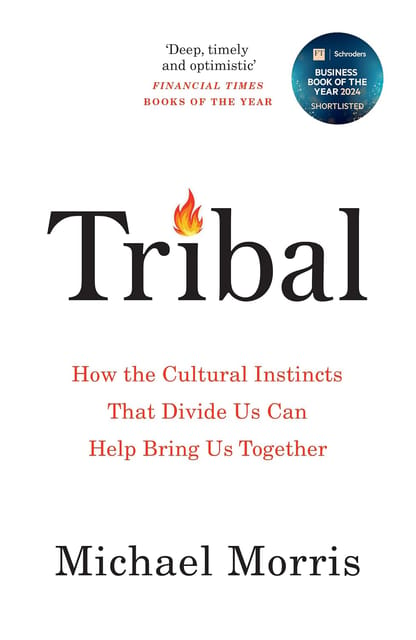
9781800755192 6a425c22710696671ab10fca Tribal How The Cultural Instincts That Divide Us Can Help Bring Us Together https://www.midlandbookshop.com/s/607fe93d7eafcac1f2c73ea4/6a425c24710696671ab10fd2/61hprvv-0ll-_sl1500_.jpg

SHORTLISTED FOR THE FINANCIAL TIMES BUSINESS BOOK OF THE YEAR

''A riveting read that will challenge you to rethink your core beliefs'' Adam Grant
''Absolutely spot-on, timely message'' Chip Heath
''A vision for collective change'' Arianna Huffington

Tribalism is our most misunderstood buzzword. We''ve all heard pundits bemoan its rise, and it''s been blamed for everything from political polarization to workplace discrimination. But as acclaimed cultural psychologist and Columbia professor Michael Morris argues, our tribal instincts are humanity''s secret weapon.

Ours is the only species that lives in tribes: groups glued together by their distinctive cultures that can grow to a scale far beyond clans and bands. Morris argues that our psychology is wired by evolution in three distinctive ways. First, the peer instinct to conform to what most people do. Second, the hero instinct to give to the group and emulate the most respected. And third, the ancestor instinct to follow the ways of prior generations. These tribal instincts enable us to share knowledge and goals and work as a team to transmit the accumulated pool of cultural knowledge onward to the next generation.

Countries, churches, political parties, and companies are tribes, and tribal instincts explain our loyalties to them and the hidden ways that they affect our thoughts, actions, and identities. Rather than deriding tribal impulses for their irrationality, we can recognize them as powerful levers that elevate performance, heal rifts, and set off shockwaves of cultural change.

Weaving together deep research, current and historical events, and stories from business and politics, Morris cuts across conventional wisdom to completely reframe how we think about our tribes. Bracing and hopeful, Tribal unlocks the deepest secrets of our psychology and gives us the tools to manage our misunderstood superpower.

About the Author

Michael Morris works as a cultural psychologist at Columbia University in its graduate Business School and its Department of Psychology. Previously he taught for a decade at Stanford University. Morris received his PhD in psychology from the University of Michigan after earning undergraduate degrees in cognitive science and English literature at Brown University. His research has discovered cultural influences on styles of cognition, communication, and collaboration, as well as situational factors that cue them and social experiences that shift them. Outside of academia, Professor Morris advises corporations, government agencies, NGOs, and political campaigns about culture-related issues. He lives in New York City.

9781800755192
in stock INR 639
1 1

Tribal How The Cultural Instincts That Divide Us Can Help Bring Us Together

ISBN: 9781800755192
₹639
₹799   (20% OFF)


Details
  • ISBN: 9781800755192
  • Author: Michael Morris
  • Publisher: Swift Press
  • Pages: 336
  • Format: Paperback
SHARE PRODUCT

Book Description

SHORTLISTED FOR THE FINANCIAL TIMES BUSINESS BOOK OF THE YEAR

''A riveting read that will challenge you to rethink your core beliefs'' Adam Grant
''Absolutely spot-on, timely message'' Chip Heath
''A vision for collective change'' Arianna Huffington

Tribalism is our most misunderstood buzzword. We''ve all heard pundits bemoan its rise, and it''s been blamed for everything from political polarization to workplace discrimination. But as acclaimed cultural psychologist and Columbia professor Michael Morris argues, our tribal instincts are humanity''s secret weapon.

Ours is the only species that lives in tribes: groups glued together by their distinctive cultures that can grow to a scale far beyond clans and bands. Morris argues that our psychology is wired by evolution in three distinctive ways. First, the peer instinct to conform to what most people do. Second, the hero instinct to give to the group and emulate the most respected. And third, the ancestor instinct to follow the ways of prior generations. These tribal instincts enable us to share knowledge and goals and work as a team to transmit the accumulated pool of cultural knowledge onward to the next generation.

Countries, churches, political parties, and companies are tribes, and tribal instincts explain our loyalties to them and the hidden ways that they affect our thoughts, actions, and identities. Rather than deriding tribal impulses for their irrationality, we can recognize them as powerful levers that elevate performance, heal rifts, and set off shockwaves of cultural change.

Weaving together deep research, current and historical events, and stories from business and politics, Morris cuts across conventional wisdom to completely reframe how we think about our tribes. Bracing and hopeful, Tribal unlocks the deepest secrets of our psychology and gives us the tools to manage our misunderstood superpower.
About the Author

Michael Morris works as a cultural psychologist at Columbia University in its graduate Business School and its Department of Psychology. Previously he taught for a decade at Stanford University. Morris received his PhD in psychology from the University of Michigan after earning undergraduate degrees in cognitive science and English literature at Brown University. His research has discovered cultural influences on styles of cognition, communication, and collaboration, as well as situational factors that cue them and social experiences that shift them. Outside of academia, Professor Morris advises corporations, government agencies, NGOs, and political campaigns about culture-related issues. He lives in New York City.

User reviews

  0/5