Shop No.20, Aurobindo Palace Market, Hauz Khas, Near Church +91 9818282497 | 011 26867121 110016 New Delhi IN
Midland The Book Shop ™
Shop No.20, Aurobindo Palace Market, Hauz Khas, Near Church +91 9818282497 | 011 26867121 New Delhi, IN
+919871604786 https://www.midlandbookshop.com/s/607fe93d7eafcac1f2c73ea4/69591829db7aed90e0608dfb/without-tag-line-480x480.png" [email protected]
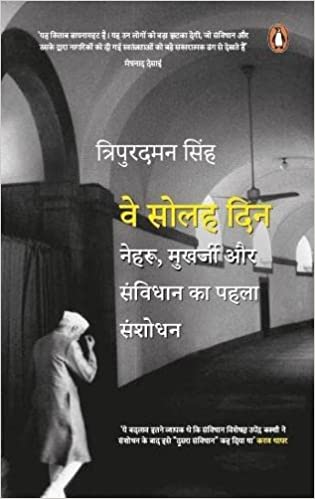
9780143453796 61eff440a9f6332a038e615b Ve Solah Din Nehru Mukharji Aur Sanvidhan Ka Pahla Sanshodhan https://www.midlandbookshop.com/s/607fe93d7eafcac1f2c73ea4/61eff441a9f6332a038e61b2/41x99miqihl-_sx313_bo1-204-203-200_.jpg

Ve Solah Din narrates the riveting story of the First Amendment to the Constitution of India-one of the pivotal events in Indian political and constitutional history, and its first great battle of ideas. Passed in June 1951 in the face of tremendous opposition within and outside Parliament, the subject of some of independent India's fiercest parliamentary debates, the First Amendment drastically curbed freedom of speech; enabled caste-based reservation by restricting freedom against discrimination; circumscribed the right to property and validated abolition of the zamindari system; and fashioned a special schedule of unconstitutional laws immune to judicial challenge. Enacted months before India's inaugural election, the amendment represents the most profound changes that the Constitution has ever seen. Faced with an expansively liberal Constitution that stood in the way of nearly every major socio-economic plan in the Congress party's manifesto, a judiciary vigorously upholding civil liberties, and a press fiercely resisting his attempt to control public discourse, Prime Minister Jawaharlal Nehru reasserted executive supremacy, creating the constitutional architecture for repression and coercion.

What extraordinary set of events led the prime minister-who had championed the Constitution when it was passed in 1950 after three years of deliberation-to radically amend it after a mere sixteen days of debate in 1951?
Drawing on parliamentary debates, press reports, judicial pronouncements, official correspondence and existing scholarship, Sixteen Stormy Days challenges conventional wisdom on iconic figures such as Jawaharlal Nehru, B.R. Ambedkar, Rajendra Prasad, Sardar Patel and Shyama Prasad Mookerji, and lays bare the vast gulf between the liberal promise of India's Constitution and the authoritarian impulses of her first government.



About the Author

Tripurdaman Singh is a British Academy Postdoctoral Fellow at the Institute of Commonwealth Studies, University of London. Born in Agra, Uttar Pradesh, Tripurdaman read politics and international studies at the University of Warwick, and subsequently earned an MPhil in modern South Asian studies and a PhD in history from the University of Cambridge. He has been a visiting fellow at the University of Leiden in the Netherlands and an Indian Council of Historical Research Fellow in India.

A Fellow of the Royal Historical Society and a Fellow of the Royal Asiatic Society, Tripurdaman's books include Imperial Sovereignty and Local Politics (Cambridge University Press) and Nehru (Harper Collins).

9780143453796
out of stock INR 239
1 1
Ve Solah Din Nehru Mukharji Aur Sanvidhan Ka Pahla Sanshodhan

Ve Solah Din Nehru Mukharji Aur Sanvidhan Ka Pahla Sanshodhan

ISBN: 9780143453796
₹239
₹299   (20% OFF)


Back In Stock Shortly - Fill The Book Request Form

Details
  • ISBN: 9780143453796
  • Author: Tripurdaman Singh
  • Publisher: Hind Pocket Books
  • Pages: 256
  • Format: Paperback
SHARE PRODUCT

Book Description

Ve Solah Din narrates the riveting story of the First Amendment to the Constitution of India-one of the pivotal events in Indian political and constitutional history, and its first great battle of ideas. Passed in June 1951 in the face of tremendous opposition within and outside Parliament, the subject of some of independent India's fiercest parliamentary debates, the First Amendment drastically curbed freedom of speech; enabled caste-based reservation by restricting freedom against discrimination; circumscribed the right to property and validated abolition of the zamindari system; and fashioned a special schedule of unconstitutional laws immune to judicial challenge. Enacted months before India's inaugural election, the amendment represents the most profound changes that the Constitution has ever seen. Faced with an expansively liberal Constitution that stood in the way of nearly every major socio-economic plan in the Congress party's manifesto, a judiciary vigorously upholding civil liberties, and a press fiercely resisting his attempt to control public discourse, Prime Minister Jawaharlal Nehru reasserted executive supremacy, creating the constitutional architecture for repression and coercion.

What extraordinary set of events led the prime minister-who had championed the Constitution when it was passed in 1950 after three years of deliberation-to radically amend it after a mere sixteen days of debate in 1951?
Drawing on parliamentary debates, press reports, judicial pronouncements, official correspondence and existing scholarship, Sixteen Stormy Days challenges conventional wisdom on iconic figures such as Jawaharlal Nehru, B.R. Ambedkar, Rajendra Prasad, Sardar Patel and Shyama Prasad Mookerji, and lays bare the vast gulf between the liberal promise of India's Constitution and the authoritarian impulses of her first government.


About the Author

Tripurdaman Singh is a British Academy Postdoctoral Fellow at the Institute of Commonwealth Studies, University of London. Born in Agra, Uttar Pradesh, Tripurdaman read politics and international studies at the University of Warwick, and subsequently earned an MPhil in modern South Asian studies and a PhD in history from the University of Cambridge. He has been a visiting fellow at the University of Leiden in the Netherlands and an Indian Council of Historical Research Fellow in India.

A Fellow of the Royal Historical Society and a Fellow of the Royal Asiatic Society, Tripurdaman's books include Imperial Sovereignty and Local Politics (Cambridge University Press) and Nehru (Harper Collins).

User reviews

  0/5