Shop No.20, Aurobindo Palace Market, Hauz Khas, Near Church +91 9818282497 | 011 26867121 110016 New Delhi IN
Midland The Book Shop ™
Shop No.20, Aurobindo Palace Market, Hauz Khas, Near Church +91 9818282497 | 011 26867121 New Delhi, IN
+919871604786 https://www.midlandbookshop.com/s/607fe93d7eafcac1f2c73ea4/69591829db7aed90e0608dfb/without-tag-line-480x480.png" [email protected]
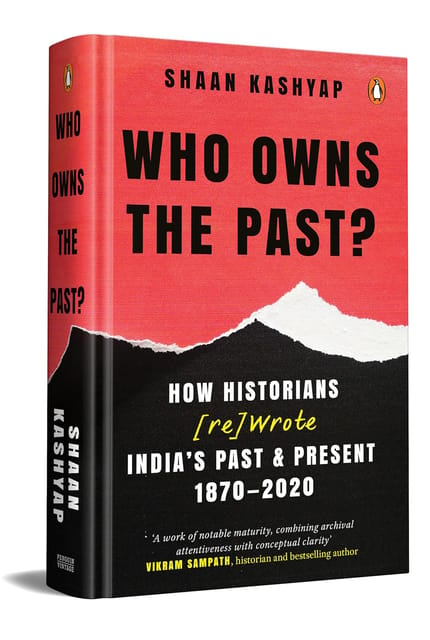
9780143476597 6a1198b0d8806b3d7ec77c63 Who Owns The Past? https://www.midlandbookshop.com/s/607fe93d7eafcac1f2c73ea4/6a1198b1d8806b3d7ec77c6b/81-gcuxmdal-_sl1500_.jpg

Why does history in India ignite such fierce debate? Who gets to shape the story of a nation-and to what end?

In Who Owns the Past?, historian Shaan Kashyap delivers a gripping, deeply researched account of how India s history has been written, rewritten, contested, and politicized from the colonial era to the age of social media. This is not just a book about the past-it s about the power struggles that define the present.

From Macaulay and James Mill to Romila Thapar and Vikram Sampath, Kashyap traces the intellectual battles that have shaped the Idea of India. He examines how textbooks are crafted, how institutions influence memory, and how political shifts leave their imprint on the stories nations tell about themselves.

Blending sharp archival work with vivid portraits of historians, policymakers, and power brokers, Who Owns the Past? is both a sweeping narrative of Indian historiography and a timely exploration of identity, ideology, and nationhood.

Provocative, balanced, and essential reading, this book asks a simple but urgent question: if the past is constantly being rewritten, what does that mean for our future?

Perfect for readers of history, politics, public policy, and anyone invested in understanding the intellectual fault lines shaping contemporary India.

About the Author

Shaan Kashyap studies and writes about Modern History. Having studied and researched the subject at BHU (Varanasi), JNU (New Delhi), and Ravenshaw University (Cuttack), he has witnessed the miscellany and medley of educational and political debates in India. He has presented his research to diverse audiences at venues ranging from IIC, New Delhi, to Humboldt-Universit t zu Berlin. He frequently writes for different news portals and reviews books. He is a Sir Jadunath Sarkar Fellow for Indian History (2024-25) with FIHCR.
9780143476597
in stockINR 639
1 1
Who Owns The Past?

Who Owns The Past?

ISBN: 9780143476597
₹639
₹799   (20% OFF)


Details
  • ISBN: 9780143476597
  • Author: Shaan Kashyap
  • Publisher: Penguin Vintage
  • Pages: 336
  • Format: Hardback
SHARE PRODUCT

Book Description

Why does history in India ignite such fierce debate? Who gets to shape the story of a nation-and to what end?

In Who Owns the Past?, historian Shaan Kashyap delivers a gripping, deeply researched account of how India s history has been written, rewritten, contested, and politicized from the colonial era to the age of social media. This is not just a book about the past-it s about the power struggles that define the present.

From Macaulay and James Mill to Romila Thapar and Vikram Sampath, Kashyap traces the intellectual battles that have shaped the Idea of India. He examines how textbooks are crafted, how institutions influence memory, and how political shifts leave their imprint on the stories nations tell about themselves.

Blending sharp archival work with vivid portraits of historians, policymakers, and power brokers, Who Owns the Past? is both a sweeping narrative of Indian historiography and a timely exploration of identity, ideology, and nationhood.

Provocative, balanced, and essential reading, this book asks a simple but urgent question: if the past is constantly being rewritten, what does that mean for our future?

Perfect for readers of history, politics, public policy, and anyone invested in understanding the intellectual fault lines shaping contemporary India.

About the Author

Shaan Kashyap studies and writes about Modern History. Having studied and researched the subject at BHU (Varanasi), JNU (New Delhi), and Ravenshaw University (Cuttack), he has witnessed the miscellany and medley of educational and political debates in India. He has presented his research to diverse audiences at venues ranging from IIC, New Delhi, to Humboldt-Universit t zu Berlin. He frequently writes for different news portals and reviews books. He is a Sir Jadunath Sarkar Fellow for Indian History (2024-25) with FIHCR.

User reviews

  0/5