Shop No.20, Aurobindo Palace Market, Hauz Khas, Near Church +91 9818282497 | 011 26867121 110016 New Delhi IN
Midland The Book Shop ™
Shop No.20, Aurobindo Palace Market, Hauz Khas, Near Church +91 9818282497 | 011 26867121 New Delhi, IN
+919871604786 https://www.midlandbookshop.com/s/607fe93d7eafcac1f2c73ea4/69591829db7aed90e0608dfb/without-tag-line-480x480.png" [email protected]
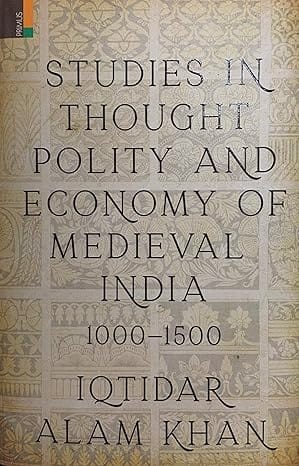
9789390430604 68c0141b5565d154eb38ef9e Studies In Thought, Polity And Economy Of Medieval India 1000�1500 https://www.midlandbookshop.com/s/607fe93d7eafcac1f2c73ea4/68c0141d5565d154eb38efa6/81y-b91je8l-_sy466_.jpg
This book attempts to comprehend the history of the Delhi Sultanate with reference to its Islamic identity. The Turkish chiefs, despite having a military advantage due to their expertise in horsemanship, could only consolidate their rule through adjustment and sharing of power with local kshatriya rulers, and, therefore, tended to incorporate an increasing number of Hindu chiefs in the ruling establishment. This process was sought to be made br>Durable by conceding to the chiefs many of the pecuniary gains and social clout they had enjoyed before the conquests. According to Barani, the ulema endorsed the view that in the given situation, provisions of fiqah evolved in Arabia were not practicable in the Delhi Sultanate. By the same logic, settlements conceding to the village chiefs’ important roles in the Fiscal administration of rural tracts were justified. Additionally, the Islamic characteristics of the state system in the Delhi Sultanate were profoundly impacted by sassanid and Turkish traditions of statecraft. With the passage of time many notions of Hindu caste culture also became influential in the mental makeup of the ruling elites of the Delhi Sultanate.


About the Author

Iqtidar Alam Khan, who retired as a Professor from Aligarh Muslim University in 1994, has done extensive research in different aspects of medieval Indian history, particularly the reign of Emperor Akbar and the history of the use of gunpowder and firearms, and he has published A Historical Dictionary of Medieval India.
9789390430604
in stock INR 945
1 1

Studies In Thought, Polity And Economy Of Medieval India 1000�1500

ISBN: 9789390430604
₹945
₹1,050   (10% OFF)


Details
  • ISBN: 9789390430604
  • Author: Iqtidar Alam Khan
  • Publisher: Primus Books
  • Pages: 192
  • Format: Hardback
SHARE PRODUCT

Book Description

This book attempts to comprehend the history of the Delhi Sultanate with reference to its Islamic identity. The Turkish chiefs, despite having a military advantage due to their expertise in horsemanship, could only consolidate their rule through adjustment and sharing of power with local kshatriya rulers, and, therefore, tended to incorporate an increasing number of Hindu chiefs in the ruling establishment. This process was sought to be made br>Durable by conceding to the chiefs many of the pecuniary gains and social clout they had enjoyed before the conquests. According to Barani, the ulema endorsed the view that in the given situation, provisions of fiqah evolved in Arabia were not practicable in the Delhi Sultanate. By the same logic, settlements conceding to the village chiefs’ important roles in the Fiscal administration of rural tracts were justified. Additionally, the Islamic characteristics of the state system in the Delhi Sultanate were profoundly impacted by sassanid and Turkish traditions of statecraft. With the passage of time many notions of Hindu caste culture also became influential in the mental makeup of the ruling elites of the Delhi Sultanate.


About the Author

Iqtidar Alam Khan, who retired as a Professor from Aligarh Muslim University in 1994, has done extensive research in different aspects of medieval Indian history, particularly the reign of Emperor Akbar and the history of the use of gunpowder and firearms, and he has published A Historical Dictionary of Medieval India.

User reviews

  0/5