Shop No.20, Aurobindo Palace Market, Hauz Khas, Near Church +91 9818282497 | 011 26867121 110016 New Delhi IN
Midland The Book Shop ™
Shop No.20, Aurobindo Palace Market, Hauz Khas, Near Church +91 9818282497 | 011 26867121 New Delhi, IN
+919871604786 https://www.midlandbookshop.com/s/607fe93d7eafcac1f2c73ea4/69591829db7aed90e0608dfb/without-tag-line-480x480.png" [email protected]
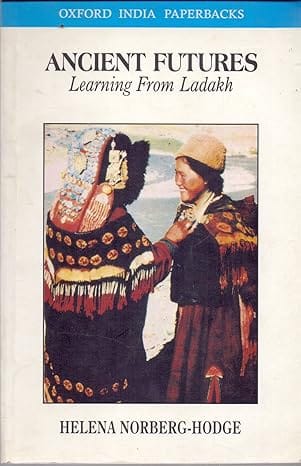
9780195631968 68c0144e5565d154eb38f02c Ancient Futures https://www.midlandbookshop.com/s/607fe93d7eafcac1f2c73ea4/68c0144f5565d154eb38f034/81r2sf-5j1l-_sy466_.jpg
Christianity in Kerala must be understood as a unique cultural configuration arising out of two kinds of situations. The first is its historical dimension: it is believed to have come to Kerala in AD 52, when St Thomas, the apostle of Christ, landed on the shores of Malabar. On another level, Christianity has existed within the framework of the dominant regional culture of Hinduism. This book is an attempt to understand the practice of Christianity in a small neighbourhood in Kerala. The author explores the relationship between Christianity and Hinduism by using the categories of time, space, architecture, and the body, and examines the ways in which Hindu, Christian and Syrian strands have woven together to form a rich cultural tapestry. Of these, the Syrian element is perhaps the most problematic, for Syrian Christians have felt the influence of the Middle Eastern churches since early times. Over the years, colonial interventions by the Portuguese and the British brought about a series of schism, leading in the late nineteenth century to a situation in which the relation of one denomination of Syrian Christians to the Patriarch of Antioch (the head of their church) was troublesome enough to be taken to the lawcourts. This book is about the Yakoba who are now divided into two groups: the Orthodox Syrians and the Jacobite Syrians. Their quarrel over ecclesiastical jurisdiction is recorded here, using people's voices to express the importance of understanding the past's relation to the present, and the ways in which the 'church quarrel' affects Syrian Christian life and experience. In this context, the relationship between the people and their priests is an uncertain one. A third question discussed in the book relates to the ritual life of Syrian Christians. Life-cycle rituals - marriage, birth and death - are seen to be not merely 'markers' of transition in the passage of life, but become statements of a moral and theological nature. There is a clear demacation bet



9780195631968
in stockINR 324
1 1
Ancient Futures

Ancient Futures

ISBN: 9780195631968
₹324
₹360   (10% OFF)


Details
  • ISBN: 9780195631968
  • Author: Helena Norberg Hodge
  • Publisher: Oxford
  • Pages: 204
  • Format: Paperback
SHARE PRODUCT

Book Description

Christianity in Kerala must be understood as a unique cultural configuration arising out of two kinds of situations. The first is its historical dimension: it is believed to have come to Kerala in AD 52, when St Thomas, the apostle of Christ, landed on the shores of Malabar. On another level, Christianity has existed within the framework of the dominant regional culture of Hinduism. This book is an attempt to understand the practice of Christianity in a small neighbourhood in Kerala. The author explores the relationship between Christianity and Hinduism by using the categories of time, space, architecture, and the body, and examines the ways in which Hindu, Christian and Syrian strands have woven together to form a rich cultural tapestry. Of these, the Syrian element is perhaps the most problematic, for Syrian Christians have felt the influence of the Middle Eastern churches since early times. Over the years, colonial interventions by the Portuguese and the British brought about a series of schism, leading in the late nineteenth century to a situation in which the relation of one denomination of Syrian Christians to the Patriarch of Antioch (the head of their church) was troublesome enough to be taken to the lawcourts. This book is about the Yakoba who are now divided into two groups: the Orthodox Syrians and the Jacobite Syrians. Their quarrel over ecclesiastical jurisdiction is recorded here, using people's voices to express the importance of understanding the past's relation to the present, and the ways in which the 'church quarrel' affects Syrian Christian life and experience. In this context, the relationship between the people and their priests is an uncertain one. A third question discussed in the book relates to the ritual life of Syrian Christians. Life-cycle rituals - marriage, birth and death - are seen to be not merely 'markers' of transition in the passage of life, but become statements of a moral and theological nature. There is a clear demacation bet


User reviews

  0/5