Shop No.20, Aurobindo Palace Market, Hauz Khas, Near Church +91 9818282497 | 011 26867121 110016 New Delhi IN
Midland The Book Shop ™
Shop No.20, Aurobindo Palace Market, Hauz Khas, Near Church +91 9818282497 | 011 26867121 New Delhi, IN
+919871604786 https://www.midlandbookshop.com/s/607fe93d7eafcac1f2c73ea4/69591829db7aed90e0608dfb/without-tag-line-480x480.png" [email protected]
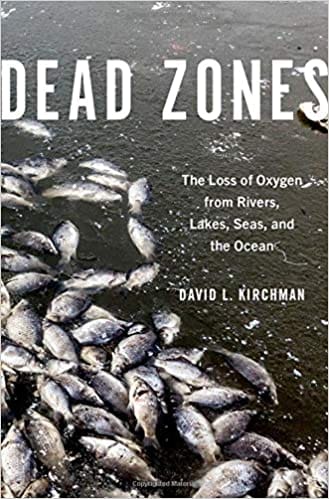
9780197520376 61a4d4a5ba7c9135d270cacb Dead Zones The Loss Of Oxygen From Rivers Lakes Seas And The Ocean https://www.midlandbookshop.com/s/607fe93d7eafcac1f2c73ea4/61a4d8510322a545a22017e8/51zj8wgibsl-_sx327_bo1-204-203-200_.jpg
Dead zones are on the rise...

Human activity has caused an increase in uninhabitable, oxygen-poor zones-also known as "dead zones"-in our waters. Oxygen is the third most abundant element in the universe, and it is a necessity for nearly all life on Earth. Yet many rivers, estuaries, coastal waters, and parts of the open ocean lack enough of it.

In this book, David L. Kirchman explains the impacts of dead zones and provides an in-depth history of oxygen loss in water. He details the role the agricultural industry plays in water pollution, showcasing how fertilizers contaminate water supplies and kickstart harmful algal blooms in local lakes, reservoirs, and coastal oceans. Algae decomposition requires so much oxygen that levels drop low enough to kill fish, destroy bottom-dwelling biota, reduce biological diversity, and rearrange food webs. We can't undo the damage completely, but we can work together to reduce the size and intensity of dead zones in places like the Gulf of Mexico, Chesapeake Bay, and the Baltic Sea.

Not only does Kirchman clearly outline what dead zones mean for humanity, he also supplies ways we can reduce their deadly impact on human and aquatic life. Nutrient pollution in some regions has already begun to decline because of wastewater treatment, buffer zones, cover crops, and precision agriculture. More needs to be done, though, to reduce the harmful impact of existing dead zones and to stop the thousands of new ones from cropping up in our waters. Kirchman provides insight into the ways changing our diet can reduce nutrient pollution while also lowering greenhouse gasses emitted by the agricultural industry. Individuals can do something positive for their health and the world around them. The resulting book allows readers interested in the environment-whether students, policymakers, ecosystem managers, or science buffs-to dive into these deadly zones and discover how they can help mitigate the harmful effects of oxygen-poor waters today.


Review

Kirchman's conversational tone makes Dead Zones nicely accessible . . . At only 172 pages, this book is not a thorough overview but more a general introduction. Since these topics are normally discussed in scientific journals, reports, academic monographs, and edited collections, it is an introduction that is long overdue. - Leon Vlieger, The Inquisitive Biologist

COVID-19 has shown us how important but uneasy our relationship with nature can be. In this book, David Kirchman reminds us not only that this isn't new but also of the importance of getting this relationship right. As you read the book, you wonder at what point we will realize that it is clearly in our own self-interest to live more harmoniously with nature than we do right now. This book is a great reminder of this and what can happen when it all goes wrong. Dead Zones explains how and why it is in our collective interest to act now and change things for the better. - Dr. Dan Laffoley, Marine Vice Chair, World Commission on Protected Areas, International Union for Conservation of Nature

Dead Zones is a stomping good read detailing the waxing and waning of low oxygen waters. Particularly appealing are the intriguing insights Kirchman gives of the scientists who discovered these zones and the twists and turns of their endeavors. The latter chapters are sobering as the link between our burning of fossil fuels, ocean warming, and the growing loss of oxygen across and through the great depths of the ocean becomes clear. There is a finale of optimism with suggestions of what we can all do if we want a thriving and productive ocean - which, after all, is our life support system. - Dr. Carol Turley, OBE, Senior Scientist, Plymouth Marine Laboratory

Fertilizer madness, killer plankton blooms, hypoxia, anoxia, mass mortalities, and mayhem: This book tackles the only form of pollution - eutrophication - that is killing off entire coastal zones and beyond. It maps out the human-induced causes, introduces the major players involved in unraveling this long-unfolding detective story, and compellingly argues for why we should care and what might be done on this key environmental battlefront. A bookshelf must! - Michael Stachowitsch, Senior Researcher and Lecturer, Department of Functional and Evolutionary Ecology, University of Vienna

About the Author

David L. Kirchman was Maxwell P. and Mildred H. Harrington Professor of Marine Studies at the University of Delaware before his retirement in 2020. He holds a BA in biology from Lawrence University, an MS in environmental engineering from Harvard University, and a PhD in environmental engineering - with a focus on microbiology - also from Harvard University. He is a recipient of the Francis Alison Award and a fellow of the American Society for Microbiology and the Association for the Sciences of Limnology and Oceanography. He is the editor of Microbial Ecology of the Oceans and the author of Processes in Microbial Ecology.

9780197520376
out of stock INR 796
1 1
Dead Zones The Loss Of Oxygen From Rivers Lakes Seas And The Ocean

Dead Zones The Loss Of Oxygen From Rivers Lakes Seas And The Ocean

ISBN: 9780197520376
₹796
₹995   (20% OFF)


Back In Stock Shortly - Fill The Book Request Form

Details
  • ISBN: 9780197520376
  • Author: David L Kirchman
  • Publisher: Oxford
  • Pages: 224
  • Format: Hardback
SHARE PRODUCT

Book Description

Dead zones are on the rise...

Human activity has caused an increase in uninhabitable, oxygen-poor zones-also known as "dead zones"-in our waters. Oxygen is the third most abundant element in the universe, and it is a necessity for nearly all life on Earth. Yet many rivers, estuaries, coastal waters, and parts of the open ocean lack enough of it.

In this book, David L. Kirchman explains the impacts of dead zones and provides an in-depth history of oxygen loss in water. He details the role the agricultural industry plays in water pollution, showcasing how fertilizers contaminate water supplies and kickstart harmful algal blooms in local lakes, reservoirs, and coastal oceans. Algae decomposition requires so much oxygen that levels drop low enough to kill fish, destroy bottom-dwelling biota, reduce biological diversity, and rearrange food webs. We can't undo the damage completely, but we can work together to reduce the size and intensity of dead zones in places like the Gulf of Mexico, Chesapeake Bay, and the Baltic Sea.

Not only does Kirchman clearly outline what dead zones mean for humanity, he also supplies ways we can reduce their deadly impact on human and aquatic life. Nutrient pollution in some regions has already begun to decline because of wastewater treatment, buffer zones, cover crops, and precision agriculture. More needs to be done, though, to reduce the harmful impact of existing dead zones and to stop the thousands of new ones from cropping up in our waters. Kirchman provides insight into the ways changing our diet can reduce nutrient pollution while also lowering greenhouse gasses emitted by the agricultural industry. Individuals can do something positive for their health and the world around them. The resulting book allows readers interested in the environment-whether students, policymakers, ecosystem managers, or science buffs-to dive into these deadly zones and discover how they can help mitigate the harmful effects of oxygen-poor waters today.


Review

Kirchman's conversational tone makes Dead Zones nicely accessible . . . At only 172 pages, this book is not a thorough overview but more a general introduction. Since these topics are normally discussed in scientific journals, reports, academic monographs, and edited collections, it is an introduction that is long overdue. - Leon Vlieger, The Inquisitive Biologist

COVID-19 has shown us how important but uneasy our relationship with nature can be. In this book, David Kirchman reminds us not only that this isn't new but also of the importance of getting this relationship right. As you read the book, you wonder at what point we will realize that it is clearly in our own self-interest to live more harmoniously with nature than we do right now. This book is a great reminder of this and what can happen when it all goes wrong. Dead Zones explains how and why it is in our collective interest to act now and change things for the better. - Dr. Dan Laffoley, Marine Vice Chair, World Commission on Protected Areas, International Union for Conservation of Nature

Dead Zones is a stomping good read detailing the waxing and waning of low oxygen waters. Particularly appealing are the intriguing insights Kirchman gives of the scientists who discovered these zones and the twists and turns of their endeavors. The latter chapters are sobering as the link between our burning of fossil fuels, ocean warming, and the growing loss of oxygen across and through the great depths of the ocean becomes clear. There is a finale of optimism with suggestions of what we can all do if we want a thriving and productive ocean - which, after all, is our life support system. - Dr. Carol Turley, OBE, Senior Scientist, Plymouth Marine Laboratory

Fertilizer madness, killer plankton blooms, hypoxia, anoxia, mass mortalities, and mayhem: This book tackles the only form of pollution - eutrophication - that is killing off entire coastal zones and beyond. It maps out the human-induced causes, introduces the major players involved in unraveling this long-unfolding detective story, and compellingly argues for why we should care and what might be done on this key environmental battlefront. A bookshelf must! - Michael Stachowitsch, Senior Researcher and Lecturer, Department of Functional and Evolutionary Ecology, University of Vienna

About the Author

David L. Kirchman was Maxwell P. and Mildred H. Harrington Professor of Marine Studies at the University of Delaware before his retirement in 2020. He holds a BA in biology from Lawrence University, an MS in environmental engineering from Harvard University, and a PhD in environmental engineering - with a focus on microbiology - also from Harvard University. He is a recipient of the Francis Alison Award and a fellow of the American Society for Microbiology and the Association for the Sciences of Limnology and Oceanography. He is the editor of Microbial Ecology of the Oceans and the author of Processes in Microbial Ecology.
User reviews

  0/5