Shop No.20, Aurobindo Palace Market, Hauz Khas, Near Church +91 9818282497 | 011 26867121 110016 New Delhi IN
Midland The Book Shop ™
Shop No.20, Aurobindo Palace Market, Hauz Khas, Near Church +91 9818282497 | 011 26867121 New Delhi, IN
+919871604786 https://www.midlandbookshop.com/s/607fe93d7eafcac1f2c73ea4/69591829db7aed90e0608dfb/without-tag-line-480x480.png" [email protected]
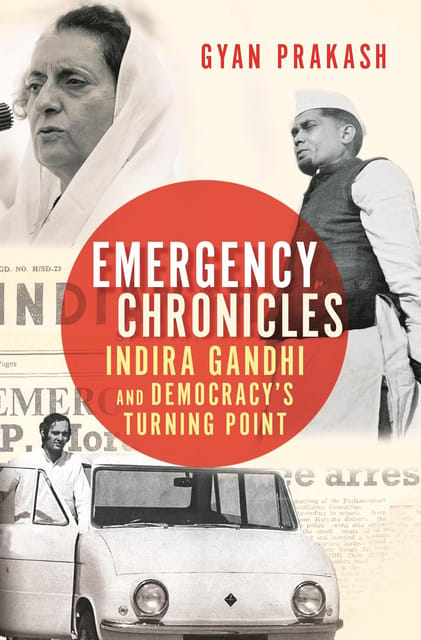
9780691186726 6a47aa177c6c9b37773d336c Emergency Chronicles Indira Gandhi And Democracys Turning Point https://www.midlandbookshop.com/s/607fe93d7eafcac1f2c73ea4/6a47aa197c6c9b37773d3374/81c-d3zxval-_sl1500_.jpg

The gripping story of an explosive turning point in the history of modern India

On the night of June 25, 1975, Indira Gandhi declared a state of emergency in India, suspending constitutional rights and rounding up her political opponents in midnight raids across the country. In the twenty-one harrowing months that followed, her regime unleashed a brutal campaign of coercion and intimidation, arresting and torturing people by the tens of thousands, razing slums, and imposing compulsory sterilization on the poor. Emergency Chronicles provides the first comprehensive account of this understudied episode in India s modern history. Gyan Prakash strips away the comfortable myth that the Emergency was an isolated event brought on solely by Gandhi s desire to cling to power, arguing that it was as much the product of Indian democracy s troubled relationship with popular politics.

Drawing on archival records, private papers and letters, published sources, film and literary materials, and interviews with victims and perpetrators, Prakash traces the Emergency s origins to the moment of India s independence in 1947, revealing how the unfulfilled promise of democratic transformation upset the fine balance between state power and civil rights. He vividly depicts the unfolding of a political crisis that culminated in widespread popular unrest, which Gandhi sought to crush by paradoxically using the law to suspend lawful rights. Her failure to preserve the existing political order had lasting and unforeseen repercussions, opening the door for caste politics and Hindu nationalism.

Placing the Emergency within the broader global history of democracy, this gripping book offers invaluable lessons for us today as the world once again confronts the dangers of rising authoritarianism and populist nationalism.

About the Author

Gyan Prakash is the Dayton-Stockton Professor of History at Princeton University. His many books include Mumbai Fables: A History of an Enchanted City (Princeton), Bonded Histories: Genealogies of Labor Servitude in Colonial India, and Another Reason: Science and the Imagination of Modern India (Princeton). He lives in Princeton, New Jersey.

9780691186726
in stock INR 796
1 1

Emergency Chronicles Indira Gandhi And Democracys Turning Point

ISBN: 9780691186726
₹796
₹995   (20% OFF)


Details
  • ISBN: 9780691186726
  • Author: Gyan Prakash
  • Publisher: Princeton University Press
  • Pages: 439
  • Format: Hardback
SHARE PRODUCT

Book Description

The gripping story of an explosive turning point in the history of modern India

On the night of June 25, 1975, Indira Gandhi declared a state of emergency in India, suspending constitutional rights and rounding up her political opponents in midnight raids across the country. In the twenty-one harrowing months that followed, her regime unleashed a brutal campaign of coercion and intimidation, arresting and torturing people by the tens of thousands, razing slums, and imposing compulsory sterilization on the poor. Emergency Chronicles provides the first comprehensive account of this understudied episode in India s modern history. Gyan Prakash strips away the comfortable myth that the Emergency was an isolated event brought on solely by Gandhi s desire to cling to power, arguing that it was as much the product of Indian democracy s troubled relationship with popular politics.

Drawing on archival records, private papers and letters, published sources, film and literary materials, and interviews with victims and perpetrators, Prakash traces the Emergency s origins to the moment of India s independence in 1947, revealing how the unfulfilled promise of democratic transformation upset the fine balance between state power and civil rights. He vividly depicts the unfolding of a political crisis that culminated in widespread popular unrest, which Gandhi sought to crush by paradoxically using the law to suspend lawful rights. Her failure to preserve the existing political order had lasting and unforeseen repercussions, opening the door for caste politics and Hindu nationalism.

Placing the Emergency within the broader global history of democracy, this gripping book offers invaluable lessons for us today as the world once again confronts the dangers of rising authoritarianism and populist nationalism.

About the Author

Gyan Prakash is the Dayton-Stockton Professor of History at Princeton University. His many books include Mumbai Fables: A History of an Enchanted City (Princeton), Bonded Histories: Genealogies of Labor Servitude in Colonial India, and Another Reason: Science and the Imagination of Modern India (Princeton). He lives in Princeton, New Jersey.

User reviews

  0/5