Shop No.20, Aurobindo Palace Market, Hauz Khas, Near Church +91 9818282497 | 011 26867121 110016 New Delhi IN
Midland The Book Shop ™
Shop No.20, Aurobindo Palace Market, Hauz Khas, Near Church +91 9818282497 | 011 26867121 New Delhi, IN
+919871604786 https://www.midlandbookshop.com/s/607fe93d7eafcac1f2c73ea4/69591829db7aed90e0608dfb/without-tag-line-480x480.png" [email protected]
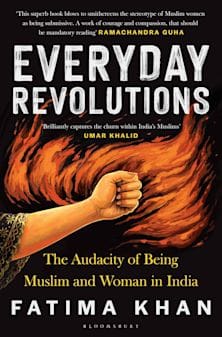
9789356402430 6ae1cc49c83b133ac8942ecb Everyday Revolutions https://www.midlandbookshop.com/s/607fe93d7eafcac1f2c73ea4/6ae1cc68d3a4b793a9e8ef1b/9789356402430.jpg

As a political journalist, Fatima Khan spent years travelling across the country, from Delhi to Karnataka and Assam to Tamil Nadu, covering hate crimes and stateled persecution, the victims of which were primarily Muslim men. What was left out of her notes were the conversations she had with the women who were related to these victims. She saw how Muslim women were becoming politicized and challenging the state and, in the process, turning their gaze inwards to question the power dynamics within their community.

They were doing so strategically, without throwing Muslim men under the bus — a bus whose driver is all too willing to run them over. In Everyday Revolutions, Khan blends her personal experiences with ground reportage to reveal how rising antiMuslim hate, statesanctioned violence and entrenched patriarchy are shaping the lives of Muslim women in India. The state’s persecution, whether manifested as a brother’s lynching, a husband’s incarceration or a hijab ban in classrooms, is compelling women to forge their own political subjecthood. This has produced an unexpected sense of agency that defies the stereotypical passivity expected of Muslim women, both by the state and by their own community. These women contest elections, build communities, create space within institutions and show up for the next protest while holding jobs, paying bills, raising children and caring for families. Situating individual experiences against broader patterns of discrimination, Khan’s Everyday Revolutions traces a growing political awakening among Muslim women that is unfolding across the country, in unforeseen ways, and often against all odds.

About The Author

Fatima Khan is an award-winning investigative journalist and writer known for her work on politics, hate crimes, social justice, and gender equality. Originally from New Delhi, India, she has reported extensively on religious persecution, communal violence, discrimination, and the challenges faced by marginalized communities. Her journalism brings together detailed field reporting, human stories, and critical analysis to explore the relationship between power, identity, and society. She has covered major events across India, including the Delhi riots, the anti-Citizenship Amendment Act protests, and the Karnataka hijab controversy. Her work has received recognition, including the United Nations Laadli Award for gender-sensitive reporting and the Young Journalist of the Year Award at the Human Rights and Religious Freedom Awards. Khan holds a master's degree in political journalism from Columbia Journalism School and continues to investigate issues affecting vulnerable communities. Through her writing, she seeks to challenge stereotypes, highlight overlooked experiences, and encourage meaningful conversations about equality, justice, and human rights.
9789356402430
in stock INR 639
1 1

Everyday Revolutions

ISBN: 9789356402430
₹639
₹799   (20% OFF)


Details
  • ISBN: 9789356402430
  • Author: Fatima Khan
  • Format: Hardback
  • Publisher: Bloomsbury India
  • Publication Date: 17 November 2026
SHARE PRODUCT

Book Description

As a political journalist, Fatima Khan spent years travelling across the country, from Delhi to Karnataka and Assam to Tamil Nadu, covering hate crimes and stateled persecution, the victims of which were primarily Muslim men. What was left out of her notes were the conversations she had with the women who were related to these victims. She saw how Muslim women were becoming politicized and challenging the state and, in the process, turning their gaze inwards to question the power dynamics within their community.

They were doing so strategically, without throwing Muslim men under the bus — a bus whose driver is all too willing to run them over. In Everyday Revolutions, Khan blends her personal experiences with ground reportage to reveal how rising antiMuslim hate, statesanctioned violence and entrenched patriarchy are shaping the lives of Muslim women in India. The state’s persecution, whether manifested as a brother’s lynching, a husband’s incarceration or a hijab ban in classrooms, is compelling women to forge their own political subjecthood. This has produced an unexpected sense of agency that defies the stereotypical passivity expected of Muslim women, both by the state and by their own community. These women contest elections, build communities, create space within institutions and show up for the next protest while holding jobs, paying bills, raising children and caring for families. Situating individual experiences against broader patterns of discrimination, Khan’s Everyday Revolutions traces a growing political awakening among Muslim women that is unfolding across the country, in unforeseen ways, and often against all odds.

About The Author

Fatima Khan is an award-winning investigative journalist and writer known for her work on politics, hate crimes, social justice, and gender equality. Originally from New Delhi, India, she has reported extensively on religious persecution, communal violence, discrimination, and the challenges faced by marginalized communities. Her journalism brings together detailed field reporting, human stories, and critical analysis to explore the relationship between power, identity, and society. She has covered major events across India, including the Delhi riots, the anti-Citizenship Amendment Act protests, and the Karnataka hijab controversy. Her work has received recognition, including the United Nations Laadli Award for gender-sensitive reporting and the Young Journalist of the Year Award at the Human Rights and Religious Freedom Awards. Khan holds a master's degree in political journalism from Columbia Journalism School and continues to investigate issues affecting vulnerable communities. Through her writing, she seeks to challenge stereotypes, highlight overlooked experiences, and encourage meaningful conversations about equality, justice, and human rights.

User reviews

  0/5