Shop No.20, Aurobindo Palace Market, Hauz Khas, Near Church +91 9818282497 | 011 26867121 110016 New Delhi IN
Midland The Book Shop ™
Shop No.20, Aurobindo Palace Market, Hauz Khas, Near Church +91 9818282497 | 011 26867121 New Delhi, IN
+919871604786 https://www.midlandbookshop.com/s/607fe93d7eafcac1f2c73ea4/69591829db7aed90e0608dfb/without-tag-line-480x480.png" [email protected]
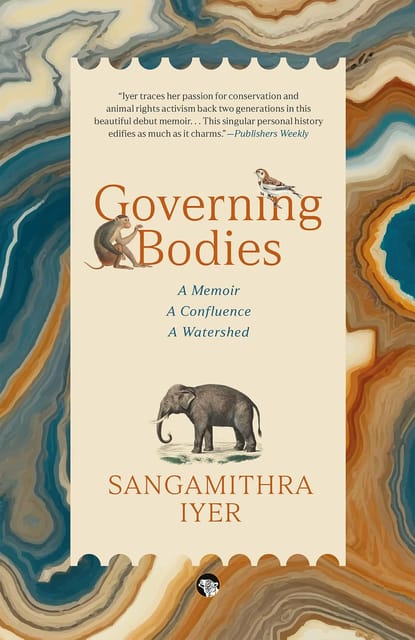
9789363361478 6ae87ee099b5b80600405215 Governing Bodies https://www.midlandbookshop.com/s/607fe93d7eafcac1f2c73ea4/6ae87ee199b5b80600405224/813ag5f-f9l-_sl1500_.jpg

A memoir that uses family history and stories of migrations to create a narrative that is as wise as it is necessary, questioning our relationships with water, land, other beings, and the very earth we live in.

As a civil engineer, Sangamithra Iyer knows about resilience from studying soils and water. As an animal rights activist, she advocates for a revolution in how we value and relate to other species. And as the child of immigrants to the US, she searches for submerged histories.

This beautifully rendered memoir of family, legacy, conservation, the natural world and those who inhabit it is animated by urgent and fundamental questions How do we disentangle ourselves from systems of harm? Is it possible to grasp the scale of planetary sorrow and emerge with truth and love as our guides, rather than despair? What is the relationship between individual action and systemic change? In trying to answer them, Governing Bodies takes the form of three meandering rivers, each written as a letter. Addressing the first of them to her grandfather, Iyer assembles the story of a man who embraced Gandhi s philosophy and went to work developing wells in Tamil Nadu. In a second letter, addressed to her father, she explores their shared interest in cultivating compassion for all beings. And then in a final letter, addressed to readers, she braids these explorations of her familial past with her own experiences of growing up and coming of age in the US, and recognizing herself as a citizen of the world. Discarding hopelessness and cynicism, she seeks to look at the natural world and our human choices with compassion and understanding.

A lyrical story of lineages and an urgently needed reckoning with the ways we control as well as liberate bodies our own and those in the natural world Governing Bodies is a profound work of timely relevance.

About the Author

Sangamithra Iyer is an environmental planner, engineer, and writer. She is a recipient of the CLMP Firecracker Award for Creative Nonfiction, a Whiting Creative Nonfiction Grant, a Cafe Royal Foundation Literature Grant, and the Diamonstein-Spielvogel Fellowship at the New York Public Library. An Emerging Writer Fellow at Aspen Summer Words, a finalist for the Siskiyou Prize for New Environmental Literature, and a recipient of a Pushcart Prize, Iyer has also received support from the Jerome and Camargo Foundations. She served as an editor of Satya magazine and as an associate for the environmental public policy action tank Brighter Green. Iyer is the founder of the Literary Animal Project, a habitat for conversations about how we portray animal lives on the page. She has devoted her career to watershed protection, wildlife coexistence, nature-based storm-water solutions, and sustainable cities.

9789363361478
in stock INR 559
1 1

Governing Bodies

ISBN: 9789363361478
₹559
₹699   (20% OFF)


Details
  • ISBN: 9789363361478
  • Author: Sangamithra Iyer
  • Publisher: Speaking Tiger
  • Pages: 400
  • Format: Paperback
SHARE PRODUCT

Book Description

A memoir that uses family history and stories of migrations to create a narrative that is as wise as it is necessary, questioning our relationships with water, land, other beings, and the very earth we live in.

As a civil engineer, Sangamithra Iyer knows about resilience from studying soils and water. As an animal rights activist, she advocates for a revolution in how we value and relate to other species. And as the child of immigrants to the US, she searches for submerged histories.

This beautifully rendered memoir of family, legacy, conservation, the natural world and those who inhabit it is animated by urgent and fundamental questions How do we disentangle ourselves from systems of harm? Is it possible to grasp the scale of planetary sorrow and emerge with truth and love as our guides, rather than despair? What is the relationship between individual action and systemic change? In trying to answer them, Governing Bodies takes the form of three meandering rivers, each written as a letter. Addressing the first of them to her grandfather, Iyer assembles the story of a man who embraced Gandhi s philosophy and went to work developing wells in Tamil Nadu. In a second letter, addressed to her father, she explores their shared interest in cultivating compassion for all beings. And then in a final letter, addressed to readers, she braids these explorations of her familial past with her own experiences of growing up and coming of age in the US, and recognizing herself as a citizen of the world. Discarding hopelessness and cynicism, she seeks to look at the natural world and our human choices with compassion and understanding.

A lyrical story of lineages and an urgently needed reckoning with the ways we control as well as liberate bodies our own and those in the natural world Governing Bodies is a profound work of timely relevance.

About the Author

Sangamithra Iyer is an environmental planner, engineer, and writer. She is a recipient of the CLMP Firecracker Award for Creative Nonfiction, a Whiting Creative Nonfiction Grant, a Cafe Royal Foundation Literature Grant, and the Diamonstein-Spielvogel Fellowship at the New York Public Library. An Emerging Writer Fellow at Aspen Summer Words, a finalist for the Siskiyou Prize for New Environmental Literature, and a recipient of a Pushcart Prize, Iyer has also received support from the Jerome and Camargo Foundations. She served as an editor of Satya magazine and as an associate for the environmental public policy action tank Brighter Green. Iyer is the founder of the Literary Animal Project, a habitat for conversations about how we portray animal lives on the page. She has devoted her career to watershed protection, wildlife coexistence, nature-based storm-water solutions, and sustainable cities.

User reviews

  0/5