Shop No.20, Aurobindo Palace Market, Hauz Khas, Near Church +91 9818282497 | 011 26867121 110016 New Delhi IN
Midland The Book Shop ™
Shop No.20, Aurobindo Palace Market, Hauz Khas, Near Church +91 9818282497 | 011 26867121 New Delhi, IN
+919871604786 https://www.midlandbookshop.com/s/607fe93d7eafcac1f2c73ea4/69591829db7aed90e0608dfb/without-tag-line-480x480.png" [email protected]
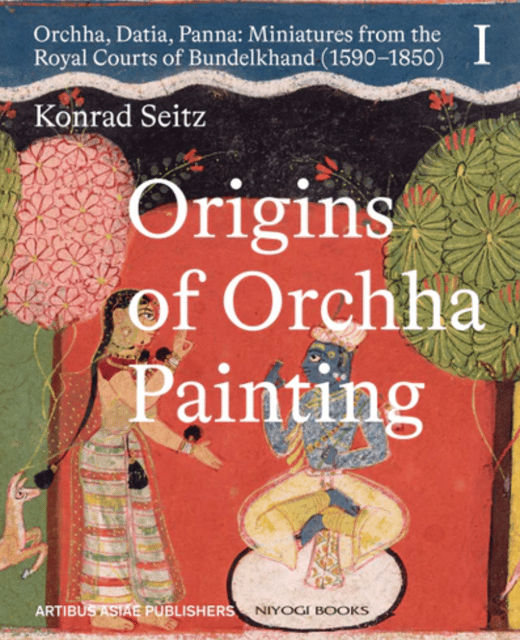
9789391125912 63173fee2f48839db7cbdb4f Origins Of Orchha Painting Orchha, Datia Panna Miniatures From The Royal Courts Of Bundelkhand (1590-1850) Vol. 1 https://www.midlandbookshop.com/s/607fe93d7eafcac1f2c73ea4/6318ae65898b2554689643d6/screenshot-2022-09-07-at-4-26-17-pm.png
This book about miniature painting at the Bundelkhand royal courts of Orchha, Datia, and Panna is the first to admit an understanding of the works that two fatal misconceptions regarding their time and place of origin have hitherto thwarted. The miniature school of Bundelkhand that first developed at Orchha was the earliest and most Indian of all the Rajput schools and at the time of its founding the only one to practice a purely indigenous style of painting, “untainted” by the naturalism of imperial Mughal painting. The author’s interpretations and stylistic analyses of over 240 paintings from his collection, many of them published here for the first time, shed light on the school’s development from the late sixteenth century to the early days of British rule. The book also introduces readers to the conceptual world of Rajput miniature painting and the rasa aesthetic that anticipates the modern reception aesthetic. Origins of Orchha Painting, the first volume of the series “Orchha, Datia, Panna: Miniatures from the Royal Courts of Bundelkhand ( 1590–1850 ),” deals with the founding period of Orchha painting, the years 1590–1605, and how it derived from pre-Mughal Early Rajput painting, which flourished at the Tomar court of Gwalior from around 1460 until the downfall of the Hindu kingdom in 1518. The subsequent volumes, Stylistic Trends in Bundelkhand Painting, analyze how this Rajput school developed during the period 1605–1635 and spread to Datia after the disintegration of Orchha in 1635 and later to Panna, the Bundela state of Chattrasal, in the 1680s. Bundelkhand painting ended with Chattrasal’s death in 1731, and it was only after a long interruption, in the beginning of the nineteenth century, that the school experienced an Indian summer at the court of Datia during the period of British suzerainty.

 
9789391125912
in stockINR 3600
1 1
Origins Of Orchha Painting Orchha, Datia Panna Miniatures From The Royal Courts Of Bundelkhand (1590-1850) Vol. 1

Origins Of Orchha Painting Orchha, Datia Panna Miniatures From The Royal Courts Of Bundelkhand (1590-1850) Vol. 1

ISBN: 9789391125912
₹3,600
₹4,500   (20% OFF)


Details
  • ISBN: 9789391125912
  • Author: Dr Phil Konrad Seitz
  • Publisher: Niyogi Books
  • Pages: 254
  • Format: Hardback
SHARE PRODUCT

Book Description

This book about miniature painting at the Bundelkhand royal courts of Orchha, Datia, and Panna is the first to admit an understanding of the works that two fatal misconceptions regarding their time and place of origin have hitherto thwarted. The miniature school of Bundelkhand that first developed at Orchha was the earliest and most Indian of all the Rajput schools and at the time of its founding the only one to practice a purely indigenous style of painting, “untainted” by the naturalism of imperial Mughal painting. The author’s interpretations and stylistic analyses of over 240 paintings from his collection, many of them published here for the first time, shed light on the school’s development from the late sixteenth century to the early days of British rule. The book also introduces readers to the conceptual world of Rajput miniature painting and the rasa aesthetic that anticipates the modern reception aesthetic. Origins of Orchha Painting, the first volume of the series “Orchha, Datia, Panna: Miniatures from the Royal Courts of Bundelkhand ( 1590–1850 ),” deals with the founding period of Orchha painting, the years 1590–1605, and how it derived from pre-Mughal Early Rajput painting, which flourished at the Tomar court of Gwalior from around 1460 until the downfall of the Hindu kingdom in 1518. The subsequent volumes, Stylistic Trends in Bundelkhand Painting, analyze how this Rajput school developed during the period 1605–1635 and spread to Datia after the disintegration of Orchha in 1635 and later to Panna, the Bundela state of Chattrasal, in the 1680s. Bundelkhand painting ended with Chattrasal’s death in 1731, and it was only after a long interruption, in the beginning of the nineteenth century, that the school experienced an Indian summer at the court of Datia during the period of British suzerainty.
 

User reviews

  0/5