Shop No.20, Aurobindo Palace Market, Hauz Khas, Near Church +91 9818282497 | 011 26867121 110016 New Delhi IN
Midland The Book Shop ™
Shop No.20, Aurobindo Palace Market, Hauz Khas, Near Church +91 9818282497 | 011 26867121 New Delhi, IN
+919871604786 https://www.midlandbookshop.com/s/607fe93d7eafcac1f2c73ea4/69591829db7aed90e0608dfb/without-tag-line-480x480.png" [email protected]
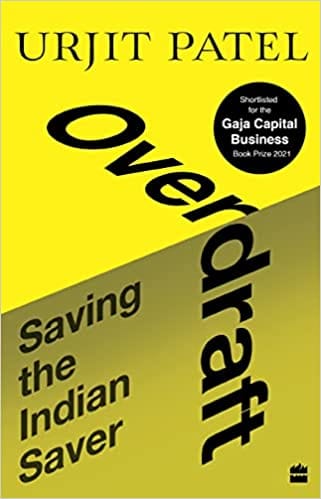
9789354227455 61fa6e37f60acc17cd18abd5 Overdraft Saving The Indian Saver https://www.midlandbookshop.com/s/607fe93d7eafcac1f2c73ea4/61fa6e39f60acc17cd18ac32/41o2yccndzl-_sx319_bo1-204-203-200_.jpg

SHORTLISTED FOR THE GAJA CAPITAL BUSINESS BOOK PRIZE

Winner of the Business Book of the Year at the Kalinga Literary Festival

All of us love to spend. But before we can do that, we have to have earned or saved some money. Only sovereigns don't have to: they can print money, or borrow; in our country, where they own banks, they can use our deposits to lend and splurge for goals that may not always be economic in nature. Many rulers have succumbed to the temptation, with dire results - inflation, debased currency, payments crises, bankrupt banks, economic stagnation, loss of public confidence. After centuries of ruinous experiences, some governments learnt, others haven't, to control themselves, create self-governing Central banks and let them manage money and regulate banks.

Sometime in 2015, news of unsustainable bad debts (non-performing assets or NPAs) in the Indian banking sector started to first trickle out, and then became a flood. In the forefront were some of India's largest government banks, and a series of tycoons who were running their empires on unpaid debts. The banks' problems landed on the table of Urjit Patel when he became Governor of Reserve Bank of India in September 2016. Based on thirty years of macroeconomic experience, he worked out the '9R' strategy which would save our savings, rescue our banks and protect them from unscrupulous racketeers. In this book, he explains the problem and how it blew up; and how he would have resolved it if he had not been prevented.


About the Author

Urjit R. Patel served as the twenty-fourth governor of the Reserve Bank of India. During his tenure he was director of Bank for International Settlements and member of the Advisory Board of the Financial Stability Institute. Before his governorship he was the deputy governor in charge of monetary policy and chaired a committee on strengthening monetary policy. From 2013 to 2018 he was principal/deputy in the G-20 and BRICS Finance Ministers' and Central Bank Governors' groups. Earlier, he worked with Reliance Industries and Infrastructure Development Finance Company. He began his career as an economist with the International Monetary Fund. He has been a consultant to the Indian Ministry of Finance, and a non-resident senior fellow of Brookings Institution, Washington, DC. Last year, he was awarded the Willbur Cross Medal by Yale University. He is an honorary fellow of Linacre College, Oxford. He lives in Mumbai.

9789354227455
in stockINR 319
1 1
Overdraft Saving The Indian Saver

Overdraft Saving The Indian Saver

ISBN: 9789354227455
₹319
₹399   (20% OFF)


Details
  • ISBN: 9789354227455
  • Author: Urjit Patel
  • Publisher: Harper Business
  • Pages: 228
  • Format: Paperback
SHARE PRODUCT

Book Description

SHORTLISTED FOR THE GAJA CAPITAL BUSINESS BOOK PRIZE

Winner of the Business Book of the Year at the Kalinga Literary Festival

All of us love to spend. But before we can do that, we have to have earned or saved some money. Only sovereigns don't have to: they can print money, or borrow; in our country, where they own banks, they can use our deposits to lend and splurge for goals that may not always be economic in nature. Many rulers have succumbed to the temptation, with dire results - inflation, debased currency, payments crises, bankrupt banks, economic stagnation, loss of public confidence. After centuries of ruinous experiences, some governments learnt, others haven't, to control themselves, create self-governing Central banks and let them manage money and regulate banks.

Sometime in 2015, news of unsustainable bad debts (non-performing assets or NPAs) in the Indian banking sector started to first trickle out, and then became a flood. In the forefront were some of India's largest government banks, and a series of tycoons who were running their empires on unpaid debts. The banks' problems landed on the table of Urjit Patel when he became Governor of Reserve Bank of India in September 2016. Based on thirty years of macroeconomic experience, he worked out the '9R' strategy which would save our savings, rescue our banks and protect them from unscrupulous racketeers. In this book, he explains the problem and how it blew up; and how he would have resolved it if he had not been prevented.


About the Author

Urjit R. Patel served as the twenty-fourth governor of the Reserve Bank of India. During his tenure he was director of Bank for International Settlements and member of the Advisory Board of the Financial Stability Institute. Before his governorship he was the deputy governor in charge of monetary policy and chaired a committee on strengthening monetary policy. From 2013 to 2018 he was principal/deputy in the G-20 and BRICS Finance Ministers' and Central Bank Governors' groups. Earlier, he worked with Reliance Industries and Infrastructure Development Finance Company. He began his career as an economist with the International Monetary Fund. He has been a consultant to the Indian Ministry of Finance, and a non-resident senior fellow of Brookings Institution, Washington, DC. Last year, he was awarded the Willbur Cross Medal by Yale University. He is an honorary fellow of Linacre College, Oxford. He lives in Mumbai.

User reviews

  0/5