
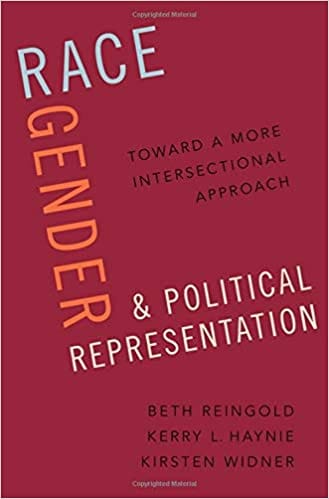
Race Gender And Political Representation Toward A More Intersectional Approach
ISBN:
9780197502174
₹1,036
₹1,295
(20% OFF)
Back In Stock Shortly - Fill The Book Request Form
Details
- ISBN: 9780197502174
- Author: Beth Reingold Kerry L Haynie Kirsten Widner
- Publisher: Oxford
- Pages: 256
- Format: Hardback
Book Description
It is well established that the race and gender of elected representatives influence the ways in which they legislate, but surprisingly little research exists on how race and gender interact to affect who is elected and how they behave once in office. How do race and gender affect who gets elected, as well as who is represented? What issues do elected representatives prioritize? Does diversity in representation make a difference?
Race, Gender, and Political Representation takes up the call to think about representation in the United States as intersectional, and it measures the extent to which political representation is simultaneously gendered and raced. Specifically, the book examines how race and gender interact to affect the election, behavior, and impact of all individuals. By putting women of color at the center of their analysis and re-evaluating traditional, "single-axis" approaches to studying the politics of race or gender, the authors demonstrate what an intersectional approach to identity politics can reveal. Drawing on original data on the presence, policy leadership, and policy impact of Black women and men, Latinas and Latinos, and White women and men in state legislative office in the late twentieth and early twenty-first centuries, each chapter shows how the politics of race, gender, and representation are far more complex than recurring "Year of the Woman" frameworks suggest. An array of race-gender similarities and differences are evident in the experiences, activities, and accomplishments of these state legislators. Yet one thing is clear: the representation of those marginalized by multiple, intersecting systems of power and inequality is intricately bound to the representation of women of color.
Review
With more women and persons of color competing for elected office than ever before, this book could not have arrived at a better time in American politics. Using an intersectional approach to examine the implications of both gender and race, indeed simultaneously, among those running for office and how they behave once elected, the authors make a significant contribution to our understanding of the politics and practices of representation in American states. - Valerie Martinez-Ebers, co-author of Human Relations Commissions: Relieving Racial Tensions in American Cities
Bringing a much-needed intersectional lens to bear on original data, Race, Gender, and Political Representation attacks a set of crucial and enduring questions about the roles of race and gender in structuring substantive and descriptive representation for women and people of color in American politics. Through their innovative analyses, the authors make clear that centering the experiences, perspectives, and interests of women of color is crucial to an accurate account of the barriers to and opportunities for representation for marginalized groups. - Dara Z. Strolovitch, author of Affirmative Advocacy: Race, Class, and Gender in Interest Group Politics
Drawing on a wealth of quantitative and qualitative data, Reingold, Haynie, and Widner demonstrate the importance of centering intersectionality and women of color in the study of political representation. They convincingly demonstrate the tremendous impact of women of color in their capacity as policy leaders and agenda-setters, as well as their role in mitigating some of the more punitive aspects of welfare-reform in the late 1990s. It is a must-read for anyone interested in how race and gender identity shapes the election, behavior, and impact of state legislators. - Sophia Jordán Wallace,, University of Washington
Bringing a much-needed intersectional lens to bear on original data, Race, Gender, and Political Representation attacks a set of crucial and enduring questions about the roles of race and gender in structuring substantive and descriptive representation for women and people of color in American politics. Through their innovative analyses, the authors make clear that centering the experiences, perspectives, and interests of women of color is crucial to an accurate account of the barriers to and opportunities for representation for marginalized groups. - Dara Z. Strolovitch, author of Affirmative Advocacy: Race, Class, and Gender in Interest Group Politics
Drawing on a wealth of quantitative and qualitative data, Reingold, Haynie, and Widner demonstrate the importance of centering intersectionality and women of color in the study of political representation. They convincingly demonstrate the tremendous impact of women of color in their capacity as policy leaders and agenda-setters, as well as their role in mitigating some of the more punitive aspects of welfare-reform in the late 1990s. It is a must-read for anyone interested in how race and gender identity shapes the election, behavior, and impact of state legislators. - Sophia Jordán Wallace,, University of Washington
About the Author
Beth Reingold is Associate Professor of Political Science and Women's, Gender, and Sexuality Studies at Emory University. Kerry L. Haynie is Associate Professor of Political Science and African and African American Studies at Duke University. Kirsten Widner is an Assistant Professor of Political Science at the University of Tennessee.













 +91 9818282497
(2).png)