Shop No.20, Aurobindo Palace Market, Hauz Khas, Near Church +91 9818282497 | 011 26867121 110016 New Delhi IN
Midland The Book Shop ™
Shop No.20, Aurobindo Palace Market, Hauz Khas, Near Church +91 9818282497 | 011 26867121 New Delhi, IN
+919871604786 https://www.midlandbookshop.com/s/607fe93d7eafcac1f2c73ea4/69591829db7aed90e0608dfb/without-tag-line-480x480.png" [email protected]
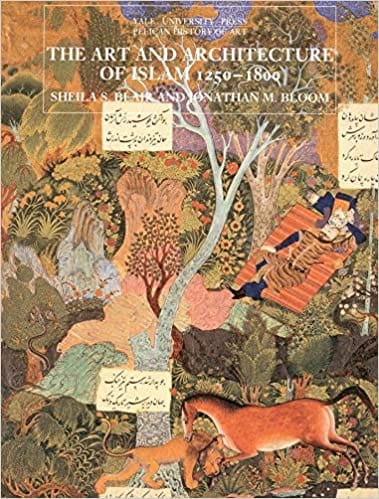
9780300064650 639b0526bb58c8f82726217f The Art And Architecture Of Islam, 1250�1800 https://www.midlandbookshop.com/s/607fe93d7eafcac1f2c73ea4/639b0527bb58c8f8272621bd/61a-dj84yrl-_sx377_bo1-204-203-200_.jpg
Virtually all the masterpieces of Islamic art-the Alhambra, the Taj Mahal, and the Tahmasp Shahnama-were produced during the period from the Mongol conquests in the early thirteenth century to the advent of European colonial rule in the nineteenth. This beautiful book surveys the architecture and arts of the traditional Islamic lands during this era.

Conceived as a sequel to The Art and Architecture of Islam: 650-1250, by Richard Ettinghausen and Oleg Grabar, the book follows the general format of the first volume, with chronological and regional divisions and architecture treated separately from the other arts. The authors describe over two hundred works of Islamic art of this period and also investigate broader social and economic contexts, considering such topics as function, patronage, and meaning. They discuss, for example, how the universal caliphs of the first six centuries gave way to regional rulers and how, in this new world order, Iranian forms, techniques, and motifs played a dominant role in the artistic life of most of the Muslim world; the one exception was the Maghrib, an area protected from the full brunt of the Mongol invasions, where traditional models continued to inspire artists and patrons. By the sixteenth century, say the authors, the eastern Mediterranean under the Ottomans and the area of northern India under the Mughals had become more powerful, and the Iranian models of early Ottoman and Mughal art gradually gave way to distinct regional and imperial styles. The authors conclude with a provocative essay on the varied legacies of Islamic art in Europe and the Islamic lands in the nineteenth and twentieth centuries.


About the Author

Sheila S. Blair and Jonathan M. Bloom are area editors of Islam for The Dictionary of Art.

9780300064650
out of stock INR 4400
1 1
The Art And Architecture Of Islam, 1250�1800

The Art And Architecture Of Islam, 1250�1800

ISBN: 9780300064650
₹4,400
₹5,500   (20% OFF)


Back In Stock Shortly - Fill The Book Request Form

Details
  • ISBN: 9780300064650
  • Author: Sheila S Blair
  • Publisher: Yale University Pres
  • Pages: 364
  • Format: Paperback
SHARE PRODUCT

Book Description

Virtually all the masterpieces of Islamic art-the Alhambra, the Taj Mahal, and the Tahmasp Shahnama-were produced during the period from the Mongol conquests in the early thirteenth century to the advent of European colonial rule in the nineteenth. This beautiful book surveys the architecture and arts of the traditional Islamic lands during this era.

Conceived as a sequel to The Art and Architecture of Islam: 650-1250, by Richard Ettinghausen and Oleg Grabar, the book follows the general format of the first volume, with chronological and regional divisions and architecture treated separately from the other arts. The authors describe over two hundred works of Islamic art of this period and also investigate broader social and economic contexts, considering such topics as function, patronage, and meaning. They discuss, for example, how the universal caliphs of the first six centuries gave way to regional rulers and how, in this new world order, Iranian forms, techniques, and motifs played a dominant role in the artistic life of most of the Muslim world; the one exception was the Maghrib, an area protected from the full brunt of the Mongol invasions, where traditional models continued to inspire artists and patrons. By the sixteenth century, say the authors, the eastern Mediterranean under the Ottomans and the area of northern India under the Mughals had become more powerful, and the Iranian models of early Ottoman and Mughal art gradually gave way to distinct regional and imperial styles. The authors conclude with a provocative essay on the varied legacies of Islamic art in Europe and the Islamic lands in the nineteenth and twentieth centuries.


About the Author

Sheila S. Blair and Jonathan M. Bloom are area editors of Islam for The Dictionary of Art.
User reviews

  0/5