Shop No.20, Aurobindo Palace Market, Hauz Khas, Near Church +91 9818282497 | 011 26867121 110016 New Delhi IN
Midland The Book Shop ™
Shop No.20, Aurobindo Palace Market, Hauz Khas, Near Church +91 9818282497 | 011 26867121 New Delhi, IN
+919871604786 https://www.midlandbookshop.com/s/607fe93d7eafcac1f2c73ea4/69591829db7aed90e0608dfb/without-tag-line-480x480.png" [email protected]
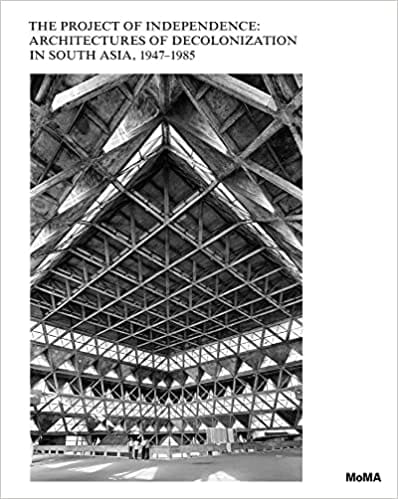
9781633451247 62516fa8e9957b38678e7856 The Project Of Independence Architectures Of Decolonization In South Asia 1947�1985 https://www.midlandbookshop.com/s/607fe93d7eafcac1f2c73ea4/62516fa9e9957b38678e7a09/511nwyw2epl-_sx396_bo1-204-203-200_.jpg
How South Asian architects broke with the colonial past and found ingenious ways to negotiate modernism’s universalist claims with the material and labor conditions on the ground.


South Asia holds a unique place among the many regions of the world where modern architecture was understood as both a tool for social progress and a global lingua franca in the second half of the 20th century. Following the end of British rule in 1947–48, architects in the newly formed nations of India, Pakistan, Bangladesh (East Pakistan until 1971) and Ceylon (now Sri Lanka) proposed a novel understanding of modernity, disrupting the colonial hierarchy of center and periphery by challenging modernism’s universalist claims.

Architecture offered multiple ways to break with the colonial past. Through the establishment of institutions that embodied the societal aspirations of the period, and the creation of new cities and spaces for political representation, South Asian architects produced a distinct body of work in dialogue with global developments while advancing the theory and practice of low-cost, climatically and socially responsive design.

Anchored by a newly commissioned portfolio of images from architectural photographer Randhir Singh, this richly illustrated and meticulously researched catalog features essays by the curators and leading scholars in the field on subjects such as the politics of concrete, institution-building, higher education, housing, infrastructure and industry, landscape and design, as well as presentations of 17 transformative projects from around the subcontinent. While several of the architects appearing in these pages have in recent years received monographic exhibitions,
The Project of Independence
marks the first attempt to consider their work within the ideological frameworks of its creation and the political context of the region as a whole.


Review

A new look at the modernist structures that defined Bangladesh, India, Pakistan and Sri Lanka after independence.... A major contribution.--Matt Shaw "Guardian"

A standard reference not only for architectural historians but also for future urban planners in societies undergoing transformation.--Jonathon Keats "Forbes: Media"

Filled with unsung triumphs and overlooked discoveries, the show is set to cast the architectural legacy of these South Asian countries in a renewed light.--Pei-Ru Keh "Wallpaper*"

Impresses the role architecture played in articulating and actualising what it meant to be politically sovereign after centuries of foreign imperial rule.--Cleo Roberts-Komireddi "Art Newspaper"

It's a sweeping, occasionally heartbreaking exhibition full of big ideas and beautiful work, too much of it not widely known.--Michael Kimmelman "New York Times: Arts"

Review

A new look at the modernist structures that defined Bangladesh, India, Pakistan and Sri Lanka after independence.... A major contribution.--Matt Shaw "Guardian"

A standard reference not only for architectural historians but also for future urban planners in societies undergoing transformation.--Jonathon Keats "Forbes: Media"

Filled with unsung triumphs and overlooked discoveries, the show is set to cast the architectural legacy of these South Asian countries in a renewed light.--Pei-Ru Keh "Wallpaper"

Impresses the role architecture played in articulating and actualising what it meant to be politically sovereign after centuries of foreign imperial rule.--Cleo Roberts-Komireddi "Art Newspaper"

It's a sweeping, occasionally heartbreaking exhibition full of big ideas and beautiful work, too much of it not widely known.-- Michael Kimmelman "New York Times: Arts"

9781633451247
out of stock INR 4025
1 1

The Project Of Independence Architectures Of Decolonization In South Asia 1947�1985

ISBN: 9781633451247
₹4,025
₹5,031   (20% OFF)


Back In Stock Shortly - Fill The Book Request Form

Details
  • ISBN: 9781633451247
  • Author: Martino Stierli
  • Publisher: Museum Of Modern Art
  • Pages: 232
  • Format: Hardback
SHARE PRODUCT

Book Description

How South Asian architects broke with the colonial past and found ingenious ways to negotiate modernism’s universalist claims with the material and labor conditions on the ground.


South Asia holds a unique place among the many regions of the world where modern architecture was understood as both a tool for social progress and a global lingua franca in the second half of the 20th century. Following the end of British rule in 1947–48, architects in the newly formed nations of India, Pakistan, Bangladesh (East Pakistan until 1971) and Ceylon (now Sri Lanka) proposed a novel understanding of modernity, disrupting the colonial hierarchy of center and periphery by challenging modernism’s universalist claims.

Architecture offered multiple ways to break with the colonial past. Through the establishment of institutions that embodied the societal aspirations of the period, and the creation of new cities and spaces for political representation, South Asian architects produced a distinct body of work in dialogue with global developments while advancing the theory and practice of low-cost, climatically and socially responsive design.

Anchored by a newly commissioned portfolio of images from architectural photographer Randhir Singh, this richly illustrated and meticulously researched catalog features essays by the curators and leading scholars in the field on subjects such as the politics of concrete, institution-building, higher education, housing, infrastructure and industry, landscape and design, as well as presentations of 17 transformative projects from around the subcontinent. While several of the architects appearing in these pages have in recent years received monographic exhibitions,
The Project of Independence
marks the first attempt to consider their work within the ideological frameworks of its creation and the political context of the region as a whole.


Review

A new look at the modernist structures that defined Bangladesh, India, Pakistan and Sri Lanka after independence.... A major contribution.--Matt Shaw "Guardian"

A standard reference not only for architectural historians but also for future urban planners in societies undergoing transformation.--Jonathon Keats "Forbes: Media"

Filled with unsung triumphs and overlooked discoveries, the show is set to cast the architectural legacy of these South Asian countries in a renewed light.--Pei-Ru Keh "Wallpaper*"

Impresses the role architecture played in articulating and actualising what it meant to be politically sovereign after centuries of foreign imperial rule.--Cleo Roberts-Komireddi "Art Newspaper"

It's a sweeping, occasionally heartbreaking exhibition full of big ideas and beautiful work, too much of it not widely known.--Michael Kimmelman "New York Times: Arts"

Review

A new look at the modernist structures that defined Bangladesh, India, Pakistan and Sri Lanka after independence.... A major contribution.--Matt Shaw "Guardian"

A standard reference not only for architectural historians but also for future urban planners in societies undergoing transformation.--Jonathon Keats "Forbes: Media"

Filled with unsung triumphs and overlooked discoveries, the show is set to cast the architectural legacy of these South Asian countries in a renewed light.--Pei-Ru Keh "Wallpaper"

Impresses the role architecture played in articulating and actualising what it meant to be politically sovereign after centuries of foreign imperial rule.--Cleo Roberts-Komireddi "Art Newspaper"

It's a sweeping, occasionally heartbreaking exhibition full of big ideas and beautiful work, too much of it not widely known.-- Michael Kimmelman "New York Times: Arts"
User reviews

  0/5