Shop No.20, Aurobindo Palace Market, Hauz Khas, Near Church +91 9818282497 | 011 26867121 110016 New Delhi IN
Midland The Book Shop ™
Shop No.20, Aurobindo Palace Market, Hauz Khas, Near Church +91 9818282497 | 011 26867121 New Delhi, IN
+919871604786 https://www.midlandbookshop.com/s/607fe93d7eafcac1f2c73ea4/69591829db7aed90e0608dfb/without-tag-line-480x480.png" [email protected]
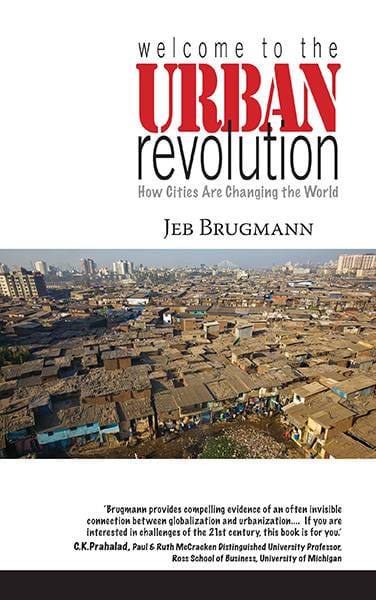
9788172238384 60b9ffa8b44b234233f150d4 Welcome To Urban Revolution : How Cities Are Changing The World https://www.midlandbookshop.com/s/607fe93d7eafcac1f2c73ea4/60ba4ef6247004754f1d1a49/9788172238384.jpg What does it mean that half the world's population now lives in cities? How do global health financial and environmental crises arise from local approaches to urban development? Why do some cities achieve their ambitious development plans while most others-even the wealthiest cities-so often fail? Where do Indian cities stand? Jeb Brugmann shows how India's continued rise is inextricably linked to its success in becoming an urban nation. Drawing on two decades of fieldwork he takes his readers on a street-level tour of the world's cities challenging conventional thinking about globalization and revealing cities as the medium for revolutionary change. Brugmann argues that the 21st century's greatest challenges can-and must-be met through improved approaches to city building. Over the next 30 years India's urban population will double. In ten years some 20 million new urban migrants largely poor will join the 62 million slum dwellers in India today. The country's basic productivity economic efficiency and political stability he explains depends upon a renewal of Indian forms of urbanism which cannot be substituted with imported designs and master planning schemes for the 'next Shanghai.' Exploring the successes of cities like Barcelona Chicago Vancouver and Brazil's Curitiba Brugmann shows how the world's most progressive cities develop their own "practices of urbanism" from the sidewalk up. These local urbanisms-ways of designing governing and living in cities that align competing interests behind common purposes-are what India needs today to manage its entry into the world's first urban century. 9788172238384
out of stock INR 399
1 1

Welcome To Urban Revolution : How Cities Are Changing The World

ISBN: 9788172238384
₹399
₹499   (20% OFF)


Back In Stock Shortly - Fill The Book Request Form

Details
  • ISBN: 9788172238384
  • Author: Brugmann Jeb
  • Publisher: HarperCollins
  • Pages: 340
  • Format: Paperback
SHARE PRODUCT

Book Description

What does it mean that half the world's population now lives in cities? How do global health financial and environmental crises arise from local approaches to urban development? Why do some cities achieve their ambitious development plans while most others-even the wealthiest cities-so often fail? Where do Indian cities stand? Jeb Brugmann shows how India's continued rise is inextricably linked to its success in becoming an urban nation. Drawing on two decades of fieldwork he takes his readers on a street-level tour of the world's cities challenging conventional thinking about globalization and revealing cities as the medium for revolutionary change. Brugmann argues that the 21st century's greatest challenges can-and must-be met through improved approaches to city building. Over the next 30 years India's urban population will double. In ten years some 20 million new urban migrants largely poor will join the 62 million slum dwellers in India today. The country's basic productivity economic efficiency and political stability he explains depends upon a renewal of Indian forms of urbanism which cannot be substituted with imported designs and master planning schemes for the 'next Shanghai.' Exploring the successes of cities like Barcelona Chicago Vancouver and Brazil's Curitiba Brugmann shows how the world's most progressive cities develop their own "practices of urbanism" from the sidewalk up. These local urbanisms-ways of designing governing and living in cities that align competing interests behind common purposes-are what India needs today to manage its entry into the world's first urban century.

User reviews

  0/5