Shop No.20, Aurobindo Palace Market, Hauz Khas, Near Church +91 9818282497 | 011 26867121 110016 New Delhi IN
Midland The Book Shop ™
Shop No.20, Aurobindo Palace Market, Hauz Khas, Near Church +91 9818282497 | 011 26867121 New Delhi, IN
+919871604786 https://www.midlandbookshop.com/s/607fe93d7eafcac1f2c73ea4/69591829db7aed90e0608dfb/without-tag-line-480x480.png" [email protected]
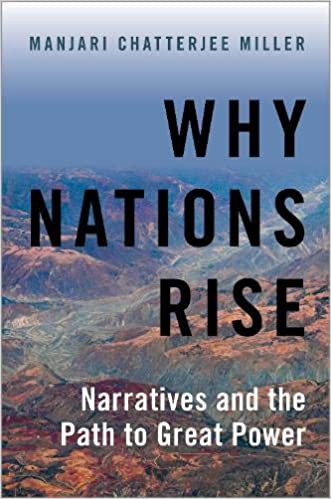
9780197558935 61cc4c913ff3aede0af6109f Why Nations Rise Narratives And The Path To Great Power https://www.midlandbookshop.com/s/607fe93d7eafcac1f2c73ea4/61cc4c933ff3aede0af610db/51epeytq2tl-_sx329_bo1-204-203-200_.jpg
What are rising powers? Do they challenge the international order? Why do some countries but not others become rising powers? In Why Nations Rise, Manjari Chaterjee Miller answers these questions and shows that some countries rise not just because they develop the military and economic power to do so but because they develop particular narratives about how to become a great power in the style of the great power du jour. These active rising powers accept the prevalent norms of the international order in order to become great powers. On the other hand, countries which have military and economic power but not these narratives do not rise enough to become great powers-they stay reticent powers. An examination of the narratives in historical (the United States, the Netherlands, Meiji Japan) and contemporary (Cold War Japan, post-Cold War China and India) cases, Why Nations Rise shows patterns of active and reticent rising powers and presents lessons for how to understand the rising powers of China and India today.


Review

Manjari Miller's Why Nations Rise marvelously rescues the cognitive dimensions of national ascendency from the traps of materialist determinism in contemporary theories of competitive international politics. By demonstrating that expanding material capacity is insufficient to transform a rising state into a great power, she draws attention to the importance of a conscious desire for mastery coupled with the purposeful articulation and embrace of a vision that can buttress, justify and legitimize its rise. A provocative contribution in the best sense of the word. - Ashley J. Tellis, Tata Chair for Strategic Affairs, Carnegie Endowment for International Peace

The rise-and fall-of great powers has been the focus of statesmen and scholars at least since Thucydides. In Why Nations Rise, Manjari Miller asks why some powers accept the existing order while others upend it. She shows that what matters is not just their power, but their narratives. As China becomes the biggest player in the history of world, Miller's study of its meteoric rise deserves close reading. - Graham Allison, Douglas Dillon Professor of Government, Harvard University

Manjari Chatterjee Miller tells a sophisticated story about why some rising powers like China become great powers, while others like India do not. She maintains that how a states thinks about its role in the world matters as much as its material capabilities. This book is essential reading for anyone interested in understanding the dynamics of the emerging multipolar international system. - John J. Mearsheimer, R. Wendell Harrison Distinguished Service Professor of Political Science, University of Chicago

In Why Nations Rise, Miller explores how rising powers become great ones. Armed with a provocative argument and comparative case studies, this book makes the case for the critical role of the narratives that states hold about what it means to be a great power and the proactive steps they take to become one. Anyone interested in power transitions should read this book. - M. Taylor Fravel, Arthur and Ruth Sloan Professor of Political Science, Director, Security Studies Program, Massachusetts Institute of Technology

Manjari Miller's comparison of national narratives throughout history provides unique context for the contrast of Chinese great power ambitions and Indian reticence. For scholars the inclusion of national narratives in the determination of state power is a significant contribution. For policymakers the lesson is clear: the 'India card' that matters most in the larger geopolitical equilibrium of Asia is for India to succeed on its on terms. - Michael J. Green, Senior Vice President for Asia and Japan Chair, Center for Strategic and International Studies

About the Author

Manjari Chatterjee Miller is Associate Professor of International Relations at the Frederick S. Pardee School of Global Studies at Boston University, and a Research Associate at the School of Global and Area Studies, University of Oxford. She is the author of Wronged by Empire: Post-Imperial Ideology and Foreign Policy in India and China, and the co-editor of the Routledge Handbook on China-India Relations.

9780197558935
out of stock INR 1080
1 1

Why Nations Rise Narratives And The Path To Great Power

ISBN: 9780197558935
₹1,080
₹1,350   (20% OFF)


Back In Stock Shortly - Fill The Book Request Form

Details
  • ISBN: 9780197558935
  • Author: Manjari Chatterjee Miller
  • Publisher: Oxford
  • Pages: 208
  • Format: Paperback
SHARE PRODUCT

Book Description

What are rising powers? Do they challenge the international order? Why do some countries but not others become rising powers? In Why Nations Rise, Manjari Chaterjee Miller answers these questions and shows that some countries rise not just because they develop the military and economic power to do so but because they develop particular narratives about how to become a great power in the style of the great power du jour. These active rising powers accept the prevalent norms of the international order in order to become great powers. On the other hand, countries which have military and economic power but not these narratives do not rise enough to become great powers-they stay reticent powers. An examination of the narratives in historical (the United States, the Netherlands, Meiji Japan) and contemporary (Cold War Japan, post-Cold War China and India) cases, Why Nations Rise shows patterns of active and reticent rising powers and presents lessons for how to understand the rising powers of China and India today.


Review

Manjari Miller's Why Nations Rise marvelously rescues the cognitive dimensions of national ascendency from the traps of materialist determinism in contemporary theories of competitive international politics. By demonstrating that expanding material capacity is insufficient to transform a rising state into a great power, she draws attention to the importance of a conscious desire for mastery coupled with the purposeful articulation and embrace of a vision that can buttress, justify and legitimize its rise. A provocative contribution in the best sense of the word. - Ashley J. Tellis, Tata Chair for Strategic Affairs, Carnegie Endowment for International Peace

The rise-and fall-of great powers has been the focus of statesmen and scholars at least since Thucydides. In Why Nations Rise, Manjari Miller asks why some powers accept the existing order while others upend it. She shows that what matters is not just their power, but their narratives. As China becomes the biggest player in the history of world, Miller's study of its meteoric rise deserves close reading. - Graham Allison, Douglas Dillon Professor of Government, Harvard University

Manjari Chatterjee Miller tells a sophisticated story about why some rising powers like China become great powers, while others like India do not. She maintains that how a states thinks about its role in the world matters as much as its material capabilities. This book is essential reading for anyone interested in understanding the dynamics of the emerging multipolar international system. - John J. Mearsheimer, R. Wendell Harrison Distinguished Service Professor of Political Science, University of Chicago

In Why Nations Rise, Miller explores how rising powers become great ones. Armed with a provocative argument and comparative case studies, this book makes the case for the critical role of the narratives that states hold about what it means to be a great power and the proactive steps they take to become one. Anyone interested in power transitions should read this book. - M. Taylor Fravel, Arthur and Ruth Sloan Professor of Political Science, Director, Security Studies Program, Massachusetts Institute of Technology

Manjari Miller's comparison of national narratives throughout history provides unique context for the contrast of Chinese great power ambitions and Indian reticence. For scholars the inclusion of national narratives in the determination of state power is a significant contribution. For policymakers the lesson is clear: the 'India card' that matters most in the larger geopolitical equilibrium of Asia is for India to succeed on its on terms. - Michael J. Green, Senior Vice President for Asia and Japan Chair, Center for Strategic and International Studies

About the Author

Manjari Chatterjee Miller is Associate Professor of International Relations at the Frederick S. Pardee School of Global Studies at Boston University, and a Research Associate at the School of Global and Area Studies, University of Oxford. She is the author of Wronged by Empire: Post-Imperial Ideology and Foreign Policy in India and China, and the co-editor of the Routledge Handbook on China-India Relations.
User reviews

  0/5