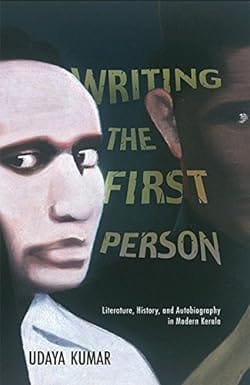
Why did autobiographical writings emerge in Kerala more than a century ago? What were the social, material, and cultural features that motivated individuals to write personal histories and memoirs? This book shows the complex ways in which private recollections, and the use of memory for loosely literary ends, also entailed the production of history by another name.
Udaya Kumar analyses this period of social transformation to show the emergence of new resources for the self-relective writer, as well as of new idioms of expression. Among the many genres and forms he studies are anti-caste writings, works advocating spiritual and social reorientation, monologic poetry, and early novels in Malayalam.
Sree Narayana Guru’s thought, the portrayal of women and desire in Kumaran Asan’s poetry, and the fictional worlds created by major novelists of this period (such as O. Chandu Menon and C.V. Raman Pillai), says Udaya Kumar, excited fresh appraisals of morality, personal emotions, and shared pasts. The envisioning of caste reform, the recording of historical change, and the creation of political identities, he shows, are often inextricable aspects of new literary practices.
Using Kerala’s cultural history as his entry point, Udaya Kumar has written an uncommonly inspirational book of ideas about the relationship of literature to history, on literature as—in a sense—‘history in person’.
Why did autobiographical writings emerge in Kerala more than a century ago? What were the social, material, and cultural features that motivated individuals to write personal histories and memoirs? This book shows the complex ways in which private recollections, and the use of memory for loosely literary ends, also entailed the production of history by another name.
Udaya Kumar analyses this period of social transformation to show the emergence of new resources for the self-relective writer, as well as of new idioms of expression. Among the many genres and forms he studies are anti-caste writings, works advocating spiritual and social reorientation, monologic poetry, and early novels in Malayalam.
Sree Narayana Guru’s thought, the portrayal of women and desire in Kumaran Asan’s poetry, and the fictional worlds created by major novelists of this period (such as O. Chandu Menon and C.V. Raman Pillai), says Udaya Kumar, excited fresh appraisals of morality, personal emotions, and shared pasts. The envisioning of caste reform, the recording of historical change, and the creation of political identities, he shows, are often inextricable aspects of new literary practices.
Using Kerala’s cultural history as his entry point, Udaya Kumar has written an uncommonly inspirational book of ideas about the relationship of literature to history, on literature as—in a sense—‘history in person’.
Subscribe to get Email Updates!
Thanks for subscribing.
Your response has been recorded.

"We Believe In The Power of Books" Our mission is to make books accessible to everyone, and to cultivate a culture of reading and learning. We strive to provide a wide range of books, from classic literature, sci-fi and fantasy, to graphic novels, biographies and self-help books, so that everyone can find something to read.
Whether you’re looking for your next great read, a gift for someone special, or just browsing, Midland is here to make your book-buying experience easy and enjoyable.