Shop No.20, Aurobindo Palace Market, Hauz Khas, Near Church +91 9818282497 | 011 26867121 110016 New Delhi IN
Midland The Book Shop ™
Shop No.20, Aurobindo Palace Market, Hauz Khas, Near Church +91 9818282497 | 011 26867121 New Delhi, IN
+919871604786 https://www.midlandbookshop.com/s/607fe93d7eafcac1f2c73ea4/69591829db7aed90e0608dfb/without-tag-line-480x480.png" [email protected]
9789356999527 656d85978bf74ce14a3b912e Indias Moment Changing Power Equations Around The World https://www.midlandbookshop.com/s/607fe93d7eafcac1f2c73ea4/656d85988bf74ce14a3b914a/71v0qmxd4nl-_sy385_.jpg

The idea of how India negotiates with the world is at the heart of this book. Career diplomat Mohan Kumar represented India at multiple international fora over a career spanning three and a half decades. During this time, he would invariably be told that Indian negotiators were among the best in the business. And yet, several of his interlocutors would ask, in the same breath, why India was such a tough customer when it came to multilateral negotiations. Indeed, it was hard to escape the view, held even by India's friends, that the country was somehow more of a naysayer than a partner in key international parleys.

This book, then, is a sincere attempt to set the record straight. At one level, India is not very different from other countries insomuch as it seeks to protect where necessary, and advance where possible, its national interest. There are several unique aspects about India and the way it approaches multilateral negotiations with the world. This book dwells on some of those fundamental factors and traces how India's positions have evolved over time.

A central contention of this book is that India has moved, slowly but surely, from being an alleged naysayer to becoming a putative partner for the world in key multilateral negotiations. More broadly, this reflects India's growing political, economic and strategic clout in the world today. It is only when this transformation is fuller and more substantial that India will be able to fulfil its manifest destiny of becoming a leading power, capable of shaping global rules.


About the Author

Mohan Kumar is dean, Office of International Affairs & Global Initiatives, and professor of diplomatic practice at OP Jindal Global University. He also serves as chairman of the Delhi-based policy think-tank, Research and Information System (RIS), for developing countries.

Kumar received his bachelor's degree in business administration from the University of Madurai (India) and his master's degree in business administration from the Faculty of Management Studies, University of Delhi. He went on to complete his doctorate (PhD) from Sciences Po, Paris.

Kumar was a member of the Indian Foreign Service for thirty-six years until he retired in July 2017 as India's ambassador to France. Kumar cut his diplomatic teeth in 1982 in Geneva at the then UN Human Rights Commission. Thus began his journey in multilateral diplomacy, which was to take him back to Geneva again and again in the 1990s. His first close involvement with the General Agreement on Tariffs and Trade (GATT) was in 1992 and continued till the establishment of the WTO (World Trade Organization). From 1995 to 2005, he was again associated with the WTO. Finally, as India's ambassador to France, Kumar was actively associated with the climate change negotiations that culminated in the Paris Accords of 2015.

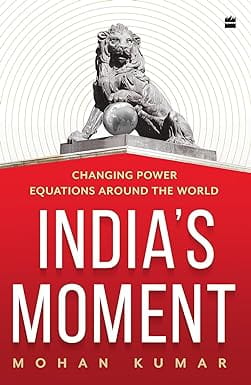
9789356999527
out of stock INR 479
1 1
Indias Moment Changing Power Equations Around The World

Indias Moment Changing Power Equations Around The World

ISBN: 9789356999527
₹479
₹599   (20% OFF)


Back In Stock Shortly - Fill The Book Request Form

Details
  • ISBN: 9789356999527
  • Author: Mohan Kumar
  • Publisher: Harper Collins
  • Pages: 296
  • Format: Paperback
SHARE PRODUCT

Book Description

The idea of how India negotiates with the world is at the heart of this book. Career diplomat Mohan Kumar represented India at multiple international fora over a career spanning three and a half decades. During this time, he would invariably be told that Indian negotiators were among the best in the business. And yet, several of his interlocutors would ask, in the same breath, why India was such a tough customer when it came to multilateral negotiations. Indeed, it was hard to escape the view, held even by India's friends, that the country was somehow more of a naysayer than a partner in key international parleys.

This book, then, is a sincere attempt to set the record straight. At one level, India is not very different from other countries insomuch as it seeks to protect where necessary, and advance where possible, its national interest. There are several unique aspects about India and the way it approaches multilateral negotiations with the world. This book dwells on some of those fundamental factors and traces how India's positions have evolved over time.

A central contention of this book is that India has moved, slowly but surely, from being an alleged naysayer to becoming a putative partner for the world in key multilateral negotiations. More broadly, this reflects India's growing political, economic and strategic clout in the world today. It is only when this transformation is fuller and more substantial that India will be able to fulfil its manifest destiny of becoming a leading power, capable of shaping global rules.


About the Author

Mohan Kumar is dean, Office of International Affairs & Global Initiatives, and professor of diplomatic practice at OP Jindal Global University. He also serves as chairman of the Delhi-based policy think-tank, Research and Information System (RIS), for developing countries.

Kumar received his bachelor's degree in business administration from the University of Madurai (India) and his master's degree in business administration from the Faculty of Management Studies, University of Delhi. He went on to complete his doctorate (PhD) from Sciences Po, Paris.

Kumar was a member of the Indian Foreign Service for thirty-six years until he retired in July 2017 as India's ambassador to France. Kumar cut his diplomatic teeth in 1982 in Geneva at the then UN Human Rights Commission. Thus began his journey in multilateral diplomacy, which was to take him back to Geneva again and again in the 1990s. His first close involvement with the General Agreement on Tariffs and Trade (GATT) was in 1992 and continued till the establishment of the WTO (World Trade Organization). From 1995 to 2005, he was again associated with the WTO. Finally, as India's ambassador to France, Kumar was actively associated with the climate change negotiations that culminated in the Paris Accords of 2015.
User reviews

  0/5