Shop No.20, Aurobindo Palace Market, Hauz Khas, Near Church +91 9818282497 | 011 26867121 110016 New Delhi IN
Midland The Book Shop ™
Shop No.20, Aurobindo Palace Market, Hauz Khas, Near Church +91 9818282497 | 011 26867121 New Delhi, IN
+919871604786 https://www.midlandbookshop.com/s/607fe93d7eafcac1f2c73ea4/69591829db7aed90e0608dfb/without-tag-line-480x480.png" [email protected]
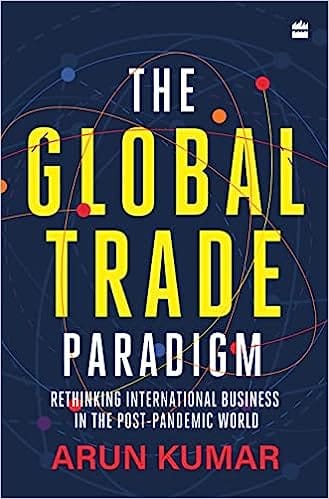
9789356991446 64943c27d6531b6f44cac7bd The Global Trade Paradigm Rethinking International Business In The Post-pandemic World https://www.midlandbookshop.com/s/607fe93d7eafcac1f2c73ea4/64943c28d6531b6f44cac8f1/51anysjsa8l-_sx327_bo1-204-203-200_.jpg

After World War II, a consensus emerged that increased global trade, with fewer barriers, would be a key element in promoting peace and prosperity around the world.

Leading nations of the world took several initiatives in this direction, starting with the Bretton Woods Conference of 1944, which led to the establishment of the international monetary system, and the 1945 San Francisco Conference, which led to the founding of the United Nations, and then on to the 1951 Treaty of Paris, which established the European Coal and Steel Community-the precursor to the European Union. The impact of free trade, liberal economic policies and the promotion of democracies helped in the economic recovery of war-devastated western Europe, Japan and the Far East.

However, the past decade has been highly turbulent due to economic and political reasons, and the imperfections of the global trade system itself. The COVID-19 pandemic was a black swan that further impacted trade. Thus, today, we witness an increasingly polarized world, where countries are turning inwards.

Will an era of expansion and integration in global trade now change to one of isolation and retreat? How will the power dynamics of major nation-states affect the future of global trade?

In The Global Trade Paradigm, Arun Kumar looks at the global trade ecosystem and the stresses it faces today. Based on considerable research and informed by Kumar's rich experience of more than four decades in multiple sectors, from high technology to government, this book presents ways in which the rapidly evolving forces-geopolitics, nationalism and technology-are reshaping the global trade system.


About the Author

Arun Kumar is a global executive who has held leadership roles in many fields: consulting and professional services, high technology, entrepreneurship, venture capital, public service and diplomacy. Currently a managing partner at Celesta Capital, a California-based venture fund, he was formerly the chairman and CEO of KPMG India. Kumar served in former US President Barack Obama's administration as the assistant secretary of commerce for global markets and director-general of the US and Foreign Commercial Service (USFCS). He is a member of the Council on Foreign Relations. Kumar has authored two books of poetry.

9789356991446
out of stock INR 559
1 1
The Global Trade Paradigm Rethinking International Business In The Post-pandemic World

The Global Trade Paradigm Rethinking International Business In The Post-pandemic World

ISBN: 9789356991446
₹559
₹699   (20% OFF)


Back In Stock Shortly - Fill The Book Request Form

Details
  • ISBN: 9789356991446
  • Author: Arun Kumar
  • Publisher: Harper Business
  • Pages: 352
  • Format: Hardback
SHARE PRODUCT

Book Description

After World War II, a consensus emerged that increased global trade, with fewer barriers, would be a key element in promoting peace and prosperity around the world.

Leading nations of the world took several initiatives in this direction, starting with the Bretton Woods Conference of 1944, which led to the establishment of the international monetary system, and the 1945 San Francisco Conference, which led to the founding of the United Nations, and then on to the 1951 Treaty of Paris, which established the European Coal and Steel Community-the precursor to the European Union. The impact of free trade, liberal economic policies and the promotion of democracies helped in the economic recovery of war-devastated western Europe, Japan and the Far East.

However, the past decade has been highly turbulent due to economic and political reasons, and the imperfections of the global trade system itself. The COVID-19 pandemic was a black swan that further impacted trade. Thus, today, we witness an increasingly polarized world, where countries are turning inwards.

Will an era of expansion and integration in global trade now change to one of isolation and retreat? How will the power dynamics of major nation-states affect the future of global trade?

In The Global Trade Paradigm, Arun Kumar looks at the global trade ecosystem and the stresses it faces today. Based on considerable research and informed by Kumar's rich experience of more than four decades in multiple sectors, from high technology to government, this book presents ways in which the rapidly evolving forces-geopolitics, nationalism and technology-are reshaping the global trade system.


About the Author

Arun Kumar is a global executive who has held leadership roles in many fields: consulting and professional services, high technology, entrepreneurship, venture capital, public service and diplomacy. Currently a managing partner at Celesta Capital, a California-based venture fund, he was formerly the chairman and CEO of KPMG India. Kumar served in former US President Barack Obama's administration as the assistant secretary of commerce for global markets and director-general of the US and Foreign Commercial Service (USFCS). He is a member of the Council on Foreign Relations. Kumar has authored two books of poetry.

User reviews

  0/5