Shop No.20, Aurobindo Palace Market, Hauz Khas, Near Church +91 9818282497 | 011 26867121 110016 New Delhi IN
Midland The Book Shop ™
Shop No.20, Aurobindo Palace Market, Hauz Khas, Near Church +91 9818282497 | 011 26867121 New Delhi, IN
+919871604786 https://www.midlandbookshop.com/s/607fe93d7eafcac1f2c73ea4/69591829db7aed90e0608dfb/without-tag-line-480x480.png" [email protected]
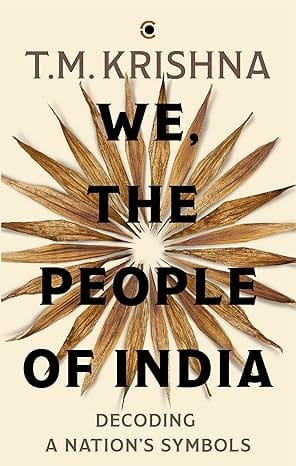
9789371973069 69678819e1e915d2cb1b4b0e We, the People of India: Decoding a Nation's Symbols https://www.midlandbookshop.com/s/607fe93d7eafcac1f2c73ea4/6967881ae1e915d2cb1b4b16/81aegdymt9l-_sy466_.jpg
About the Book

A THOUGHTFUL TRIBUTE TO INDIA'S FOUNDATIONAL PRINCIPLES AND THE ONGOING DIALOGUE THAT SHAPES ITS DEMOCRACY AND IDENTITY.
India’s independence came at the cost of millions of lives and deep psychological scars. As attempts were made to urgently stitch together the states and princely provinces that would eventually comprise the Republic of India, members of the Constituent Assembly and the newly formed government also debated the symbols—the national flag, anthem, emblem, motto and Preamble—that could represent the free people of the new nation and reinforce in them a sense of their own identity as citizens.
Not all of the processes and communications around this passage from idea to symbol were clearly documented. It is this lack of ready historical material that set musician and cultural commentator T.M. Krishna on a journey of discovery that shaped itself into this extraordinary book. Through meticulous research and persistent questioning, he found ways to explore the historical, cultural and philosophical contexts of each symbol, revealing how they evolved to become powerful metaphors for a nation’s aspirations, struggles and dreams for the future.
In tracing the origin and evolution of the tricolour with the chakra in the centre, the discussions about the significance of the lions on the Ashokan pillar capitals and the proclamations to be included in the Preamble to the Constitution of India, the debates around the adoption of the motto ‘Satyameva Jayate’ and Tagore’s Jana Gana Mana, leading up to the present controversy around Vande Mataram, Krishna invites readers to reconsider the significance of each of these symbols in contemporary India.
Written with a deep sincerity and analytical clarity, We, the People of India is an eloquent meditation on constitutionalism, freedom and the importance of effective representation in a complex, vibrant democracy. It is also, ultimately, a citizenly response to a nation in crisis.

About the Author

Thodur Madabusi Krishna is a vocalist in the Karnatik tradition. He was awarded the Sangita Kalanidhi, one of the most prestigious honours in Karnatik music, conferred annually by the Madras Music Academy. He is also a prominent public intellectual, writing and speaking on issues of structural inequality and culture. Krishna is the driving force behind the Chennai Kalai Theru Vizha and the Svanubhava initiative. He has been part of inspiring collaborations, such as Chennai Poromboke Paadal, performances with the Jogappas, who are traditional transgender musicians, the Karnatik Kattaikuttu that brought together art forms from two ends of the social spectrum, and an enduring poetic partnership with Tamil writer Perumal Murugan. He is also involved in The Edict Project, an attempt to reimagine Ashoka’s edicts in musical form, in collaboration with Ashoka University.
Krishna is the award-winning author of A Southern Music: The Karnatik Story, Reshaping Art and Sebastian and Sons: A Brief History of Mrdangam Makers. In 2016, he received the prestigious Ramon Magsaysay Award in recognition of ‘his forceful commitment as artist and advocate to art’s power to heal India’s deep social divisions’.



About the Author

Thodur Madabusi Krishna is a vocalist in the Karnatik tradition. He was awarded the Sangita Kalanidhi, one of the most prestigious honours in Karnatik music, conferred annually by the Madras Music Academy. He is also a prominent public intellectual, writing and speaking on issues of structural inequality and culture. Krishna is the driving force behind the Chennai Kalai Theru Vizha and the Svanubhava initiative. He has been part of inspiring collaborations, such as Chennai Poromboke Paadal, performances with the Jogappas, who are traditional transgender musicians, the Karnatik Kattaikuttu that brought together art forms from two ends of the social spectrum, and an enduring poetic partnership with Tamil writer Perumal Murugan. He is also involved in The Edict Project, an attempt to reimagine Ashoka’s edicts in musical form, in collaboration with Ashoka University.
Krishna is the award-winning author of A Southern Music: The Karnatik Story, Reshaping Art and Sebastian and Sons: A Brief History of Mrdangam Makers. In 2016, he received the prestigious Ramon Magsaysay Award in recognition of ‘his forceful commitment as artist and advocate to art’s power to heal India’s deep social divisions’.
9789371973069
in stockINR 719
1 1
We, the People of India: Decoding a Nation's Symbols

We, the People of India: Decoding a Nation's Symbols

ISBN: 9789371973069
₹719
₹899   (20% OFF)


Details
  • ISBN: 9789371973069
  • Author: T.M. Krishna
  • Publisher: Context
  • Pages: 480
  • Format: Hardback
  • Release Date: 27 January 2026
SHARE PRODUCT

Book Description

About the Book

A THOUGHTFUL TRIBUTE TO INDIA'S FOUNDATIONAL PRINCIPLES AND THE ONGOING DIALOGUE THAT SHAPES ITS DEMOCRACY AND IDENTITY.
India’s independence came at the cost of millions of lives and deep psychological scars. As attempts were made to urgently stitch together the states and princely provinces that would eventually comprise the Republic of India, members of the Constituent Assembly and the newly formed government also debated the symbols—the national flag, anthem, emblem, motto and Preamble—that could represent the free people of the new nation and reinforce in them a sense of their own identity as citizens.
Not all of the processes and communications around this passage from idea to symbol were clearly documented. It is this lack of ready historical material that set musician and cultural commentator T.M. Krishna on a journey of discovery that shaped itself into this extraordinary book. Through meticulous research and persistent questioning, he found ways to explore the historical, cultural and philosophical contexts of each symbol, revealing how they evolved to become powerful metaphors for a nation’s aspirations, struggles and dreams for the future.
In tracing the origin and evolution of the tricolour with the chakra in the centre, the discussions about the significance of the lions on the Ashokan pillar capitals and the proclamations to be included in the Preamble to the Constitution of India, the debates around the adoption of the motto ‘Satyameva Jayate’ and Tagore’s Jana Gana Mana, leading up to the present controversy around Vande Mataram, Krishna invites readers to reconsider the significance of each of these symbols in contemporary India.
Written with a deep sincerity and analytical clarity, We, the People of India is an eloquent meditation on constitutionalism, freedom and the importance of effective representation in a complex, vibrant democracy. It is also, ultimately, a citizenly response to a nation in crisis.

About the Author

Thodur Madabusi Krishna is a vocalist in the Karnatik tradition. He was awarded the Sangita Kalanidhi, one of the most prestigious honours in Karnatik music, conferred annually by the Madras Music Academy. He is also a prominent public intellectual, writing and speaking on issues of structural inequality and culture. Krishna is the driving force behind the Chennai Kalai Theru Vizha and the Svanubhava initiative. He has been part of inspiring collaborations, such as Chennai Poromboke Paadal, performances with the Jogappas, who are traditional transgender musicians, the Karnatik Kattaikuttu that brought together art forms from two ends of the social spectrum, and an enduring poetic partnership with Tamil writer Perumal Murugan. He is also involved in The Edict Project, an attempt to reimagine Ashoka’s edicts in musical form, in collaboration with Ashoka University.
Krishna is the award-winning author of A Southern Music: The Karnatik Story, Reshaping Art and Sebastian and Sons: A Brief History of Mrdangam Makers. In 2016, he received the prestigious Ramon Magsaysay Award in recognition of ‘his forceful commitment as artist and advocate to art’s power to heal India’s deep social divisions’.


About the Author

Thodur Madabusi Krishna is a vocalist in the Karnatik tradition. He was awarded the Sangita Kalanidhi, one of the most prestigious honours in Karnatik music, conferred annually by the Madras Music Academy. He is also a prominent public intellectual, writing and speaking on issues of structural inequality and culture. Krishna is the driving force behind the Chennai Kalai Theru Vizha and the Svanubhava initiative. He has been part of inspiring collaborations, such as Chennai Poromboke Paadal, performances with the Jogappas, who are traditional transgender musicians, the Karnatik Kattaikuttu that brought together art forms from two ends of the social spectrum, and an enduring poetic partnership with Tamil writer Perumal Murugan. He is also involved in The Edict Project, an attempt to reimagine Ashoka’s edicts in musical form, in collaboration with Ashoka University.
Krishna is the award-winning author of A Southern Music: The Karnatik Story, Reshaping Art and Sebastian and Sons: A Brief History of Mrdangam Makers. In 2016, he received the prestigious Ramon Magsaysay Award in recognition of ‘his forceful commitment as artist and advocate to art’s power to heal India’s deep social divisions’.

User reviews

  0/5